Cast Iron vs Stainless Steel Sump Pump: Which Is Better? (November 2026)
Cast iron wins for most basements because its heavier housing pulls heat away from the motor. Stainless steel is the better pick when your pit sees corrosive water or you want lighter lifting at replacement time.
On this page (8 sections)
- Cast iron vs stainless steel sump pump: the short answer
- Cast iron vs stainless steel sump pump side by side
- Why cast iron handles heat better in a sump pit
- Does stainless steel really resist rust better?
- Which metal suits your pit and water load?
- Who should buy which pump?
- Horsepower and pit size: the numbers that decide it
- The verdict: cast iron or stainless steel?
Cast iron wins for most basements because its heavier housing pulls heat away from the motor. Stainless steel is the better pick when your pit sees corrosive water or you want lighter lifting at replacement time.
This cast iron vs stainless steel sump pump comparison looks at how each metal handles heat, rust and grit. Then it matches four real pumps to the pit and water load you actually have.
A pump's housing is only part of the story. The motor, switch and impeller decide how long it lasts, so the metal is one factor among several.
 Best for a typical basement
Zoeller M98 Flow-Mate 1/2 HP Cast Iron Sump Pump
Cast iron vs stainless steel sump pump: the short answer
Cast iron is the better default for a basement pit, while stainless steel earns its place in corrosive or hard-to-lift situations. Most homes with a standard 11 in pit do best with a cast iron pump and a good float switch.
The reason is heat. A running pump motor builds heat, and a dense cast iron housing spreads that heat into the water around it.
That keeps the motor cooler and can extend its life.
Stainless steel also resists rust better than bare cast iron. Many quality pumps mix the two: a cast iron body with a stainless steel motor housing or hardware.
The Wayne models here do exactly that.
Don't choose on metal alone. An oil-filled motor, a non-clogging impeller and a float that stays free of debris matter more than the housing label.
Cast iron vs stainless steel sump pump side by side
The two metals differ in weight, heat handling and rust resistance, and those differences show up in the pumps themselves. Here's how the four models in this comparison stack up.
| Feature | Cast iron housing | Stainless steel housing |
|---|---|---|
| Heat handling | Dense metal pulls heat from the motor | Thinner metal sheds less heat |
| Rust resistance | Needs a coating to resist corrosion | Resists rust on its own |
| Weight | Heavier for the same horsepower | Lighter to lift and move |
| Best use | Steady cycling in a normal pit | Corrosive water and tight lifting |
The Zoeller M98 is the purest cast iron pick here. Its oil-filled motor sits in a cast iron housing, and the maker uses stainless steel for the hardware, float guard and switch arm so the parts that touch water most often don't rust.
The Wayne CDU980E and CDU1000 combine a cast iron volute with a stainless steel motor housing. That mix gets you cast iron's heat handling at the base plus stainless steel's corrosion resistance up top.
What the scores mean
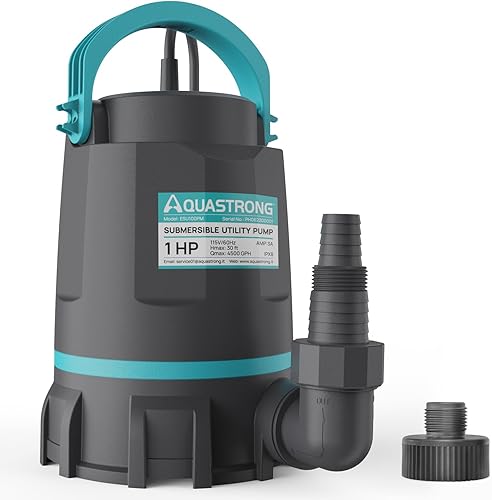
Our score weighs specs, features and the job each pump is built for against what a basement owner needs. The AQUASTRONG tops this group on flow and value, even though its housing is thermoplastic.
The cast iron Zoeller lands second because it fits the typical basement better than a 1 HP pump that may overwhelm a small pit. The Wayne models follow, each suited to a specific pit size or water load.
Why cast iron handles heat better in a sump pit
Cast iron's density lets it carry motor heat into the surrounding water more effectively than thinner metal. That matters because sump pumps often run in short, frequent bursts during storms.
A pump that cycles every few minutes builds heat faster than one that runs once a day. An oil-filled motor with a cast iron housing, like the Zoeller M98, is designed to dissipate that heat and prevent overheating.
The Zoeller's oil-filled motor sits inside a cast iron housing. Heat moves from the motor into the oil, then into the metal and out into the water in the pit.
That chain is the pump's cooling system.
Thin stainless steel has less mass to absorb and spread heat. That doesn't make it a bad choice, but a stainless pump may rely more on motor design and oil filling than on the housing for cooling.
When heat handling matters most
Heat becomes a real concern when your pump runs often. A pit that fills every few minutes during a storm, or a pump that short-cycles because the float is set too low, puts more strain on the motor.
If your pump runs several times an hour in wet season, a cast iron model with an oil-filled motor is the safer pick. The cast iron pumps we rate highest all pair that housing with a motor built for steady work.
If your pit only fills a few times a week, heat is less of an issue. A stainless or mixed-metal pump can handle that lighter load fine.
Does stainless steel really resist rust better?
Yes, stainless steel resists rust better than cast iron, which is why many pumps use it for hardware and housings. But rust resistance only matters if your pit water is actually corrosive.
Basement water varies. Some pits see clean groundwater, while others collect water with grit, minerals or slight acidity.
A cast iron housing relies on a coating to keep that water off the bare metal.
The Wayne CDU980E and CDU1000 use a corrosion-resistant stainless steel motor housing over a cast iron volute. That puts the rust-resistant metal where water and splashes hit most.
The Zoeller takes a different route. Its housing is cast iron with an epoxy-coated finish, and its hardware, float guard and switch arm are stainless steel.
The parts most likely to corrode are protected even though the body is cast iron.
Check the parts that touch water
A cast iron pump with painted hardware and a steel float arm can rust faster than a stainless pump with a cast iron body. Look at the switch arm, float guard, screws and discharge fitting, not just the housing.
The Zoeller's LED plug is another detail worth noting. It lights up to show the pump has power, so you can check readiness without pulling the pump.
Which metal suits your pit and water load?
Match the housing to your pit size and how hard the pump works, not to a label alone. A 1/2 HP cast iron pump handles a typical home pit, while a 1 HP model earns its place in a deep pit under heavy water.
Start with pit diameter. The Wayne models are built for 11 in and larger pits.
The Zoeller M98 fits a standard pit and its vertical float keeps the switch clear of the sides.
Then look at water volume. A pit that fills fast needs more flow, and the AQUASTRONG 1 HP moves up to 4,500 gallons per hour at 5 ft of lift.
The Wayne CDU1000 reaches 6,100 GPH, the highest in this group.
If your water carries grit or solids, a vortex impeller like the Zoeller's passes them without clogging. A top-suction design like the Wayne's pulls water from above the sludge that settles at the bottom.
When a stainless steel pump makes sense
Choose stainless when your pit water is corrosive, when the pump sits in a damp spot that stays wet, or when lifting a heavy pump out for cleaning is hard for you. A stainless housing weighs less and resists rust without relying on a coating.
The mixed cast iron and stainless steel Wayne models give you some of both. You get cast iron's heat handling at the volute and stainless steel's corrosion resistance on the motor housing.
When cast iron is the better call
Choose cast iron when your pump cycles often and you want the housing to help cool the motor. The Zoeller M98's oil-filled motor and cast iron housing are built for that steady work in a normal basement pit.
Cast iron also tends to cost less than stainless for the same horsepower. If budget matters and your water isn't harsh, a coated cast iron pump covers the job.
Who should buy which pump?
The Zoeller M98 is the best fit for most basements, and the other three cover specific needs. Each one wins on a different point, so match the pump to your pit rather than to the metal alone.
The Zoeller is the safest default for a standard basement. Its cast iron housing and oil-filled motor suit steady storm cycling, and its stainless steel hardware resists rust where it counts.
A 4,320 GPH flow rate covers most home pits.
The Wayne CDU980E suits a pit that needs more flow than a 1/2 HP pump gives but still fits an 11 in opening. Its vertical float stays clear of the sides in tight spaces, and its top suction helps keep debris out.
The CDU1000 is for a large pit that fills fast in wet seasons. Its 1 HP motor moves the most water of the cast iron models here, and its 5-year warranty covers longer service.
It's heavier, so plan for the lift at cleaning time.
The AQUASTRONG is the flood-volume pick. It moves a lot of water and drains a pit almost dry, but its thermoplastic housing isn't cast iron or stainless steel.
Pick it when water volume matters more than metal.
If you're still weighing a metal pump against a plastic one, our cast iron vs plastic sump pump comparison covers the housing trade-offs. And if your water problem is a one-off spill rather than a wet pit, the guide to sump pump vs utility pump explains which tool to reach for.
Horsepower and pit size: the numbers that decide it
Horsepower sets how much water a pump moves and how high it can lift it, so pick by pit depth and flow needs. The metal is secondary to getting the size right.
The AQUASTRONG 1 HP moves up to 4,500 GPH at 5 ft and lifts water up to 30 ft. The Wayne CDU1000 1 HP reaches 6,100 GPH with a 10 ft lift height.
Higher lift means the pump can push water farther up and out.
The Zoeller M98 1/2 HP moves 4,320 GPH and lifts to 23 ft. The Wayne CDU980E 3/4 HP reaches 5,490 GPH.
Those are strong numbers for a standard basement.
If your discharge line runs far or rises high, a pump with more lift height helps. If your pit is shallow and the outlet is close, a 1/2 HP pump handles the job without extra strain.
Sizing for a narrow or deep pit
An 11 in pit is the minimum for the Wayne models. The Zoeller's vertical float and compact body suit a standard pit too.
Measure your pit's inside diameter before ordering.
A deep pit holds more water, so a 1 HP pump empties it faster. A shallow pit fills and empties quickly, and a 1/2 HP pump may cycle more often than a larger one.
If you're unsure between sizes, our guide to 1/3 or 1/2 HP sump pumps helps you match horsepower to your pit and water volume. The metal choice comes after that.
The verdict: cast iron or stainless steel?
Choose cast iron for most basement pits, and pick stainless steel when your water is corrosive or lifting a heavy pump is a problem. In this cast iron vs stainless steel sump pump matchup, the Zoeller M98 is the overall winner for a typical home.
Its cast iron housing and oil-filled motor handle steady cycling well, and its stainless steel hardware covers the parts most exposed to water. The 4,320 GPH flow rate fits a standard 11 in pit without overkill.
The Wayne CDU980E and CDU1000 are the picks when your pit needs more flow or a vertical float in a narrow opening. Their mixed cast iron and stainless steel build gives you both metals in one pump.
The AQUASTRONG wins on raw volume for flood-prone pits, though its thermoplastic housing means it isn't part of the cast iron vs stainless steel question. For a typical wet basement, the cast iron Zoeller is the pump to buy.
If you want to see how the metal options compare across more models, the best cast iron sump pumps guide rounds up the top choices. And if you're replacing a plastic pump, our cast iron vs plastic comparison shows what changes when you move up to metal.
Frequently asked questions
Does a cast iron sump pump rust?
Cast iron can rust if water sits on bare metal, so makers coat the housing. Stainless steel resists rust better, but a pump's switch, screws and float arm matter just as much as the housing material.
How long does a cast iron sump pump last?
A cast iron pump with an oil-filled motor often outlasts a plastic-housing model because the housing sheds heat. Actual life depends on how often it runs, how clean the pit stays and whether the switch stays free of debris.
Do I need a cast iron sump pump for a small pit?
No. A smaller 1/2 HP cast iron pump like the Zoeller M98 fits an 11 in pit and handles typical seepage.
Cast iron helps in any size pit, but you only need the extra horsepower when the water volume is high.
Can I use a stainless steel pump in a pit with grit?
Yes, but choose one with a design that keeps grit out of the switch. A top-suction pump like the Wayne CDU980E pulls water from above the sludge, and its vertical float stays clear of the debris that settles at the bottom.


