9 Best Submersible Sump Pump for Home Use (November 2026)
The best submersible sump pumps for home basements include the AQUASTRONG 1 HP Sump Pump 4500 GPH for most wet basements, the Zoeller M98 Flow-Mate 1/2 HP Cast Iron Sump Pump for permanent basement installs, and the Zoeller M53 Mighty-Mate 1/3 HP Sump Pump for small sump pits.
On this page (10 sections)
- Best submersible sump pumps for home basements
- How these submersible sump pumps compare
- How we compared these pumps
- What flow rate does a home sump pump need?
- Cast iron or plastic: which housing lasts in a wet pit?
- Automatic or manual: which switch fits your basement?
- How deep should the pump sit in the pit?
- Do you need a backup for your submersible pump?
- Pedestal or submersible: does the pump type matter for your pit?
- The verdict: which pump fits your home?
The best submersible sump pump for home use is the AQUASTRONG 1 HP 4500 GPH, a manual pump with high flow among the portable manual pumps here and a bottom intake that pulls water down to 1/5 inch. For a permanent pit you set and forget, the cast iron Zoeller M98 is the better long-term buy.
The right pump for your home depends on the job. A fixed basement pit needs an automatic float switch and a housing that sheds heat.
A one-off flooded window well or a soaked crawl space calls for a light portable pump you can carry and plug in.
Our picks at a glance
-
1
-
2
 Best for permanent basement installs
Zoeller M98 Flow-Mate 1/2 HP Cast Iron Sump Pump
9.3/10 our score
See it on Amazon -
3
- 4
 Check it
6699 1/6HP Portable Utility Pump Submersible Small
Best for spot water removal - 5
 Check it
Wayne CDU980E 3/4 HP Cast Iron Sump Pump
Best for heavy storm seasons - 6
 Check it
FOTING 1HP Sump Pump 4600GPH Clean/Dirty Submersible
Best for dirty water and debris - 7
 Best value cast iron pumpCheck it
- 8
 Check it
Green Expert 1/4HP Submersible Sump Pump
Best for emergency draining - 9
 Check it
Green Expert 1/3 HP Sump Pump with Water Sensor
Best for the last inch of water
Best submersible sump pumps for home basements
Every pump here moves water, but they split into two jobs. Automatic cast iron pumps live in a pit and start on their own.
Manual utility pumps go wherever you carry them and run while plugged in.
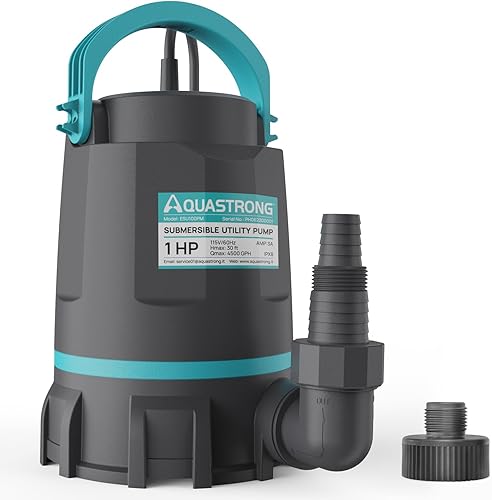
AQUASTRONG 1 HP Sump Pump 4500 GPH: Best for most wet basements
- 4500 GPH at 5 ft
- 1/5 inch drain-down
- Thermoplastic housing
- Built-in thermal overload protector
- 10 ft cord
A high-flow manual portable pump that clears standing water fast, and the bottom suction pulls water down to 1/5 inch from the floor.
Pros
- High flow among the portable manual pumps
- Drains down to 1/5 inch
- Handles solids up to 1/5 inch
- Thermal overload protection
Cons
- Manual plug-in operation
- Thermoplastic body, not cast iron
This pump earns the top score because it clears water fast for a manual portable pump. AQUASTRONG rates it at 4500 GPH at 5 ft of lift, or about 75 gallons a minute, with a 30 ft vertical limit.
That matters when a storm dumps water into your pit faster than a smaller pump can move it.
The bottom suction design pulls water to within 1/5 inch of the surface and passes solids up to 1/5 inch. So muddy water after a heavy rain does not clog it the way a fine-screened intake would.
The thermoplastic housing resists corrosion, and a built-in thermal overload protector shuts the motor down if it runs dry.
It runs in manual mode: you plug it in to start and unplug it to stop. For a flooded window well or a pool you are draining, that is fine.
For a basement pit you want watched over at 2 a.m., pair it with a separate float switch or choose an automatic model below.
Zoeller M98 Flow-Mate 1/2 HP Cast Iron Sump Pump: Best for permanent basement installs
- Cast iron oil-filled motor
- Built-in snap-action float switch
- Non-clogging vortex impeller
- LED power plug
- Stainless steel hardware
A cast iron, oil-filled pump with a float switch and an LED plug, built to run automatically in a fixed pit.
Pros
- Cast iron housing sheds heat well
- Automatic float switch
- LED power plug shows power at a glance
- Vortex impeller passes solids
Cons
- Lower lift than the top pick
- Heavier at about 31 lb
The M98 is the pump you install once and stop thinking about. Zoeller builds it with a cast iron, oil-filled motor housing that spreads heat well and keeps the motor cool over repeated short cycles.
The non-clogging vortex impeller passes solids, so debris in the pit does not jam the rotor.
Its built-in snap-action float switch starts and stops the pump automatically, and Zoeller rates it to move up to 4320 gallons per hour. The LED plug lets you glance at the outlet and see whether the pump has power.
Stainless steel hardware, float guard and switch arm hold up in a damp pit.
At 1/2 HP it lifts water 23 ft, less than the 1 HP models here. That is enough for most basement floors and short discharge runs.
The pump weighs about 31 lb, so plan the install with a helper if your pit is deep. Choose it for a fixed pit where reliability beats raw flow.
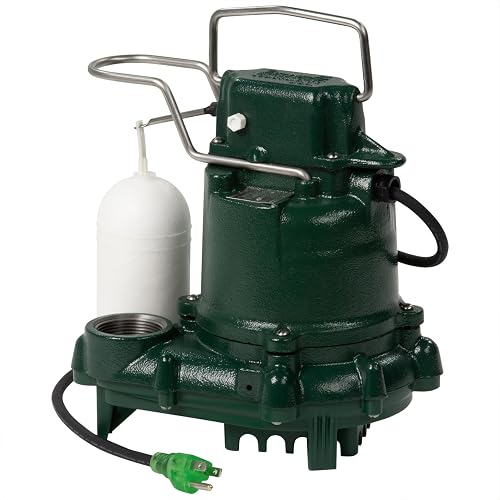
Zoeller M53 Mighty-Mate 1/3 HP Sump Pump: Best for small sump pits
- Cast iron switch case, motor and pump housing
- Automatic float switch
- Non-clogging vortex impeller
- LED power plug
- 9 ft cord
The compact cast iron Zoeller fits narrow pits and runs automatically, with enough lift for a typical basement floor.
Pros
- Compact footprint
- Cast iron housing
- Automatic snap-action float
- LED power plug
Cons
- Modest 1/3 HP motor
- Lowest max lift of the cast iron picks
The M53 packs the same cast iron build and float switch into a smaller body. Its footprint of about 10 by 8 inches fits narrow pits where a bigger pump would not sit flat.
The 1/3 HP motor moves water on a typical basement floor, and the vortex impeller resists clogs.
The snap-action float starts the pump without any setup, and the LED plug shows power at the outlet. Zoeller coats the cast iron in epoxy to resist wear in a wet pit.
Hardware and the float guard are stainless steel.
The trade-off is lift. At 19.25 ft it is the lowest of the cast iron picks, so a long vertical discharge run eats into its flow.
Choose it for a tight pit with a short run, or when a 1/2 HP pump would not fit.
6699 1/6HP Portable Utility Pump Submersible Small: Best for spot water removal
- 1100 GPH horizontal flow
- Drains to 1/12 inch
- Screened inlet
- GHT 3/4 in and 1 in hose adapters
- 10 ft cord
A small manual pump for clean water jobs, light enough to carry to a flooded window well or a clogged appliance.
Pros
- Drains down to 1/12 inch
- Light at about 6 lb
- Two hose adapters included
- Quiet running
Cons
- Manual plug-in only
- Not for dirty water
The 6699 pump is not a basement pit pump. It is a small manual pump for spot jobs: a flooded window well, a water heater leak, a clogged tub.
At 1/6 HP it moves 1100 gallons an hour horizontally, and its screened intake pulls water down to 1/12 inch.
It weighs about 6 lb and stands under 8.5 inches tall, so you can carry it up a ladder and store it on a shelf. Two adapters are included, GHT 3/4 inch for a garden hose and 1 inch for a lay-flat hose.
A thermal overload protector guards the motor if it runs dry.
It handles clean water only. Grit or debris in the water will clog the screen.
Choose it for quick draining and emergency cleanup, not as the main pump in a sump pit.
Wayne CDU980E 3/4 HP Cast Iron Sump Pump: Best for heavy storm seasons
- 5490 GPH
- Cast iron and stainless steel body
- Vertical float switch
- Top suction anti-airlock design
- 5-year warranty
High flow in a cast iron and stainless body with a vertical float that fits narrow pits and a 5-year warranty.
Pros
- Highest GPH in this group
- Cast iron and stainless steel
- Vertical float suits narrow pits
- 5-year warranty
Cons
- Designed for 11 inch and larger pits
- Indoor use only
Wayne rates the CDU980E at 5490 GPH, the highest flow in this roundup. A 3/4 HP motor in a cast iron and stainless steel body handles heavy storms when your pit refills fast.
The vertical float switch fits narrow pits and the top suction design reduces airlock and clogging.
Assembled in the USA and backed by a 5-year warranty, it is built for years of service in a fixed pit. It needs an 11 inch or larger pit, so measure yours first.
The pump is for indoor use only.
The warranty is the longest here, and the flow rate is the best for a storm-prone basement. The cost is a bigger, heavier pump that wants a wide pit.
Choose it when your pit fills quickly and you want a long warranty to back the install.
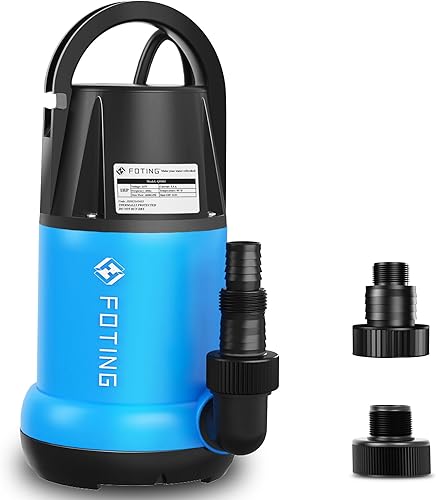
FOTING 1HP Sump Pump 4600GPH Clean/Dirty Submersible: Best for dirty water and debris
- 4600 GPH at 5 ft
- Handles solids up to 1/5 inch
- Removable bottom for cleaning
- Thermal overload protection
- 10 ft cord
A manual 1 HP pump with the highest lift here and a removable base, built for water that carries grit and debris.
Pros
- Highest max lift in this group
- Removable base cleans easily
- Handles 1/5 inch solids
- Thermal overload protection
Cons
- Manual mode only
- No automatic start or stop
FOTING's pump matches the top pick's flow closely and beats it on lift. It moves 4600 GPH at 5 ft and lifts water up to 31 ft, the highest vertical limit in this group.
The intake passes solids up to 1/5 inch, so gritty water after a storm does not stop it.
The removable bottom unscrews with four screws, which makes cleaning out debris easy. A 10 ft cord gives you reach, and the thermoplastic housing resists corrosion.
The thermal overload protector shuts the motor down if it runs dry.
This is a manual pump. FOTING states it does not start or stop on its own, so it suits draining a flooded area you are watching, not a pit that needs to run unattended.
Choose it when your discharge run climbs high or the water carries debris.
Wayne CDU790 1/3 HP Sump Pump: Best value cast iron pump
- 4600 GPH
- Cast iron volute and epoxy-coated steel housing
- Vertical float tested to 1 million cycles
- Top suction anti-airlock design
- 3-year warranty
A budget cast iron pump with strong flow for its size and a tested vertical float, assembled in the USA.
Pros
- High flow for a 1/3 HP pump
- Cast iron volute
- Float tested to 1 million cycles
- 3-year warranty
Cons
- Epoxy-coated steel housing, not full cast iron
- Indoor use only
The CDU790 is the value pick among the cast iron pumps. Wayne rates it at 4600 GPH, strong flow for a 1/3 HP motor.
It pairs a cast iron volute and base with an epoxy-coated steel housing and stainless steel fasteners for a long life in a wet pit.
The vertical float switch is tested to 1 million cycles, so it should keep starting the pump through years of storms. Top suction reduces airlock and clogging without a weep hole.
It installs in about 15 minutes in an 11 inch or larger pit, and Wayne backs it with a 3-year warranty.
Its 20 ft lift is modest. Choose it when you want a cast iron pump with automatic operation at a lower cost than the Zoeller M98, and your discharge run is short.
Green Expert 1/4HP Submersible Sump Pump: Best for emergency draining
- 1800 GPH
- 28 ft max head
- Lightweight portable body
- Plug-and-use operation
- Hose adapters and lifting rope included
A light manual pump for fast cleanup after a leak or storm, with enough lift for a deep window well.
Pros
- Light and easy to carry
- 28 ft max head
- No installation needed
- Adapters and lifting rope included
Cons
- Manual plug-in operation
- Lower flow than the 1 HP models
Green Expert's 1/4 HP pump is built for fast cleanup after a leak. It moves 1800 GPH and lifts water 28 ft, enough for a deep window well or a basement floor drain.
You place it in the water, plug it in, and it starts pumping.
The body is light enough to carry with one hand, and a lifting rope and hose adapters come in the box. A thermal overload protector guards the motor, and the pump runs quietly.
It suits a crawl space, a garage floor or a hot tub you need to empty.
At 30 gallons a minute it is slower than the 1 HP pumps. It runs manually only.
Choose it for emergency water removal and household draining when you do not need an automatic pit pump.
Green Expert 1/3 HP Sump Pump with Water Sensor: Best for the last inch of water
- 2000 GPH
- Water sensor drains to 1/25 inch
- Automatic and manual modes
- Non-return valve
- Thermal overload protection
The water sensor gets water down to 1/25 inch on a flat floor, the lowest drain-down in this group, in auto or manual mode.
Pros
- Drains to 1/25 inch
- Automatic and manual modes
- Non-return valve stops backflow
- Light at 8.8 lb
Cons
- Modest flow for a 1/3 HP pump
- Best on rigid, flat surfaces
This pump has the lowest drain-down in the roundup. Its water sensor pulls water to 1/25 inch on a flat floor, then stops the pump 15 seconds after it detects no water.
That gets the last puddle a normal pit pump leaves behind.
It runs in automatic or manual mode, so you can use it as a small backup pump or as a utility pump. The non-return valve stops water from flowing back after the pump shuts off.
Three adapters cover 1 inch and 1-1/2 inch discharge hoses plus a 3/4 inch garden hose thread.
Flow is modest at 2000 GPH for a 1/3 HP motor. The water sensor works best on rigid, flat surfaces, and soft pool covers can block the low base.
Choose it when drying a flat basement floor to the last inch matters more than speed.
How these submersible sump pumps compare
The table lines up horsepower, flow and lift so you can see which pump matches your pit and discharge run. A pump with high flow and low lift is not the same buy as one with modest flow and a long vertical reach.
| Product | Best for | Horsepower | Flow rate | Max lift | Our score |
|---|---|---|---|---|---|
| AQUASTRONG 1 HP Sump Pump 4500 GPH | most wet basements | 1 HP | 75 gpm | 30 ft | 9.7 |
| Zoeller M98 Flow-Mate 1/2 HP Cast Iron Sump Pump | permanent basement installs | 1/2 HP | 72 gpm | 23 ft | 9.3 |
| Zoeller M53 Mighty-Mate 1/3 HP Sump Pump | small sump pits | 1/3 HP | 19.25 ft | 9.2 | |
| 6699 1/6HP Portable Utility Pump Submersible Small | spot water removal | 1/6 HP | 18 gpm | 16.5 ft | 9.1 |
| Wayne CDU980E 3/4 HP Cast Iron Sump Pump | heavy storm seasons | 3/4 HP | 92 gpm | Not published | 9.0 |
| FOTING 1HP Sump Pump 4600GPH Clean/Dirty Submersible | dirty water and debris | 1 HP | 76 gpm | 31 ft | 8.9 |
| Wayne CDU790 1/3 HP Sump Pump | value cast iron pump | 1/3 HP | 63 gpm | 20 ft | 8.8 |
| Green Expert 1/4HP Submersible Sump Pump | emergency draining | 1/4 HP | 30 gpm | 28 ft | 8.4 |
| Green Expert 1/3 HP Sump Pump with Water Sensor | the last inch of water | 1/3 HP | 33 gpm | 23 ft | 7.2 |
How we compared these pumps
We ranked each pump on four things: flow at a realistic lift, the housing material, the switch type and the drain-down depth. Our score weighs specs, features and buyer feedback against what you're shopping for.
Flow rates only mean something at a stated lift. A pump rated at 4500 GPH at 5 ft will move less water up a 20 ft discharge pipe.
We used each pump's published lift limit to judge how it handles a real basement install.
Housing material decides how long a pump lasts in a wet pit. Cast iron sheds motor heat better than thermoplastic.
Plastic resists corrosion and keeps the pump light. We weighed each build against the job it is meant for.
Switch type matters most for a fixed pit. An automatic float switch lets the pump run without you.
A manual pump needs a person to plug it in, which suits portable draining but not a pit that fills overnight.
What flow rate does a home sump pump need?
A typical home basement pit needs a pump rated around 2,500 to 4,300 gallons per hour at a few feet of lift. Go higher when your pit fills fast in storms or your discharge pipe runs long and high.
Flow drops as lift rises. A pump rated at 4500 GPH at 5 ft moves far less water up 20 ft of pipe.
Check the rating at the lift your install actually uses, not just the headline number.
Match the pump to your worst storm. If your pit fills in minutes during heavy rain, a 3/4 HP or 1 HP pump like the Wayne CDU980E or AQUASTRONG gives you headroom.
A 1/3 HP pump like the Wayne CDU790 handles a slow, steady inflow.
When a 1/3 HP pump is enough
A 1/3 HP pump suits a shallow pit and a short discharge run. It costs less and draws less power.
Choose one when your basement stays mostly dry and the pump only runs a few times a year.
When to move up to 3/4 HP or 1 HP
Move up when the pit refills while the pump runs, or when the discharge pipe climbs more than a few feet. The extra flow clears the pit before the next cycle starts.
Cast iron or plastic: which housing lasts in a wet pit?
Cast iron lasts longer in a fixed pit because it moves motor heat away faster. Plastic resists corrosion and stays light, which suits portable draining.
Heat is what kills sump pumps. A motor that cannot shed heat runs hotter and wears out sooner.
Zoeller and Wayne build their pit pumps with cast iron motor housings for that reason. Our guide to cast iron vs plastic sump pump breaks down the trade-offs in more detail.
Thermoplastic pumps like the AQUASTRONG and FOTING models weigh less and never rust. They suit utility work and draining jobs where the pump runs for an hour and then goes back on the shelf.
Cast iron pumps for a permanent pit
Pick cast iron when the pump sits in a pit and runs automatically for years. The Zoeller M98 and M53, the Wayne CDU980E and the Wayne CDU790 all use cast iron motor housings.
They cost more but handle the heat of repeated cycles better.
Plastic pumps for portable draining
Pick a thermoplastic pump when you carry it from job to job. The AQUASTRONG, FOTING, 6699 and Green Expert pumps are lighter and resist corrosion.
They are the better fit for flooded window wells, pools and garages.
Automatic or manual: which switch fits your basement?
An automatic float switch is the right choice for a fixed basement pit. A manual pump suits portable draining and one-off cleanup jobs.
A float switch starts the pump when water rises and stops it when the pit empties. That matters when a storm hits overnight and you are asleep.
The Zoeller M98 and M53, the Wayne CDU980E and the Wayne CDU790 all run automatically.
Manual pumps like the AQUASTRONG and FOTING models need you to plug them in and unplug them. They suit a flooded window well you are watching or a pool you are draining.
If you want a manual pump in a pit, add a separate float switch or a backup controller.
Float switch or vertical switch?
A vertical float switch moves straight up and down in a narrow column, so it fits tight pits. A tethered float swings on a cord and needs more room.
The Wayne CDU980E and CDU790 use vertical floats that fit 11 inch pits.
How deep should the pump sit in the pit?
Set the pump on a solid, level surface at the bottom of the pit. Most pit pumps stop with an inch or two of water left, while bottom-suction models get down to 1/5 inch or less.
Depth matters more after a flood than during normal service. A pump that leaves an inch of water leaves a wet floor every cycle.
Bottom suction and water-sensor designs pull the water level lower.
The AQUASTRONG and FOTING pumps drain to 1/5 inch. The 6699 utility pump reaches 1/12 inch and the Green Expert water-sensor pump goes to 1/25 inch.
Those low intakes suit flat floors and finished basements where standing water causes damage.
Keep the intake clear. Debris packed around the base blocks flow and makes the motor work harder.
A removable base like the FOTING's makes cleaning easier between storms.
Do you need a backup for your submersible pump?
A backup pump is worth adding if your basement floods when the power goes out. A battery backup or water-powered backup keeps water moving when the main pump cannot run.
Power loss is the common failure in a storm. The main pump stops, the pit fills, and water reaches the floor.
A backup pump handles that gap. Many homes pair a cast iron main pump with a battery backup in the same pit.
A backup needs its own discharge line or a shared line with a check valve. Size it to handle the inflow during a typical outage.
If you also deal with sewage, keep the systems separate: our guide to sump pump vs sewage ejector pump explains why.
Pedestal or submersible: does the pump type matter for your pit?
A submersible pump sits in the water and runs quietly. A pedestal pump stands on a pipe above the pit with the motor out of the water.
Both handle a basement; the right one depends on your pit depth and noise tolerance.
Submersible pumps fit deeper pits and run quieter because the water muffles the motor. Pedestal pumps keep the motor dry, which suits shallow pits and makes service easier.
Our comparison of pedestal vs submersible sump pump covers the install differences, and our explainer on what is a pedestal sump pump covers how they work.
If your pit is deep enough to submerge the pump, a submersible model is the usual choice. If the pit is shallow or you want to check the motor without pulling it, a pedestal pump may fit better.
The verdict: which pump fits your home?
The AQUASTRONG 1 HP 4500 GPH is the best submersible sump pump for home use when you need raw flow and a low drain-down. For a permanent pit that runs on its own, choose the cast iron Zoeller M98.
Pick by job. A fixed basement pit with a short run suits the Zoeller M98 or the Wayne CDU790.
A storm-prone pit that fills fast wants the Wayne CDU980E. A portable pump for cleanup fits the AQUASTRONG, FOTING or 6699.
And for the last inch of water on a flat floor, the Green Expert water-sensor pump gets it lowest.
Test your pump before the wet season. Pour a bucket of water into the pit and watch the float start the motor.
That five-minute check is the cheapest flood insurance you can buy.
Our top 3 picks at a glance
-
1
-
2
Best for permanent basement installs
Zoeller M98 Flow-Mate 1/2 HP Cast Iron Sump Pump
9.3/10 our score
See it on Amazon -
3
Frequently asked questions
What size submersible sump pump do I need for home use?
Most basements do fine with a 1/3 to 1/2 HP pump that moves about 2,500 to 4,300 gallons per hour. Go to 3/4 HP or 1 HP when your pit fills fast in storms or the discharge pipe runs far and high.
Is a cast iron or plastic sump pump better for a basement?
Cast iron sheds motor heat better and lasts longer in a fixed pit. Plastic housings resist corrosion and cost less.
A cast iron pump is the safer long-term buy for a permanent install; plastic suits portable draining.
Do I need a float switch on a submersible sump pump?
Yes, if the pump sits in a pit and needs to run on its own. A float switch starts the pump when water rises and stops it when the pit empties.
Manual pumps without a float need you to plug and unplug them.
How low should a sump pump drain the water?
A typical pit pump stops with an inch or two left, which is fine for a working sump. A utility pump with bottom suction or a water sensor gets down to about 1/5 to 1/25 inch, which helps after a flood on a flat floor.
Can a submersible sump pump handle dirty water?
Some can, up to a stated solids size. The AQUASTRONG and FOTING models pass solids up to 1/5 inch.
Pumps built for clean water only, like the 6699 utility pump, can clog if grit or debris gets in.
How long do submersible sump pumps last?
A cast iron pump in a fixed pit often runs 7 to 10 years with regular testing. Thermoplastic portable pumps tend to last less under constant use.
Check yours each spring before the wet season.


