9 Best Battery Backup Sump Pumps for Power Outages (October 2026)
The best battery backup sump pumps include the Basement Watchdog Special CONNECT Battery Backup for narrow sump pits, the Wayne ESP25n 12V Battery Backup Sump Pump for a coated steel pump, and the Zoeller Aquanot 508 Battery Backup System for an integrated check valve.
On this page (7 sections)
- How we chose battery backup sump pumps
- The best battery backup sump pumps for different basements
- Should you choose a backup pump or an inverter system?
- What should you check before buying a battery backup sump pump?
- How can you plan battery runtime?
- How do you keep a battery backup ready?
- Which battery backup sump pump should you choose?
The best battery backup sump pump for most basements is the Basement Watchdog Special CONNECT, which includes a dual float switch, control panel and battery fluid sensor. Choose Wayne for its coated steel and cast iron construction, or consider an inverter system if you want backup power for your existing pump.
A battery backup can help keep water moving when an outage stops the primary pump. The right choice depends on your pit, the battery you plan to use, and whether you want a separate backup pump or an inverter that powers the existing one.
For a wider overview, see our sump pump buying guide. If you're weighing the cost and maintenance against the risk of an outage, read whether a battery backup sump pump is worth it.
Our picks at a glance
-
1
 Best for narrow sump pits
Basement Watchdog Special CONNECT Battery Backup
9.1/10 our score
See it on Amazon -
2
 Best for a coated steel pump
Wayne ESP25n 12V Battery Backup Sump Pump
9.0/10 our score
See it on Amazon -
3
 Best for an integrated check valve
Zoeller Aquanot 508 Battery Backup System
8.9/10 our score
See it on Amazon
- 4
 Check it
Liberty Pumps 441 Battery Backup Sump Pump
Best for a mercury-free switch - 5
 Check it
OLTEANP 2500W Sump Pump Battery Backup System
Best for a remote LCD display - 6
 Check it
PumpSpy 2000W Battery Backup System
Best for two primary pumps - 7
 Check it
VIOPUMPO 2500W Sump Pump Backup System
Best for battery status at a distance - 8
 Check it
Basement Sentry 12V Backup Sump Pump
Best for a built-in alarm system - 9
 Check it
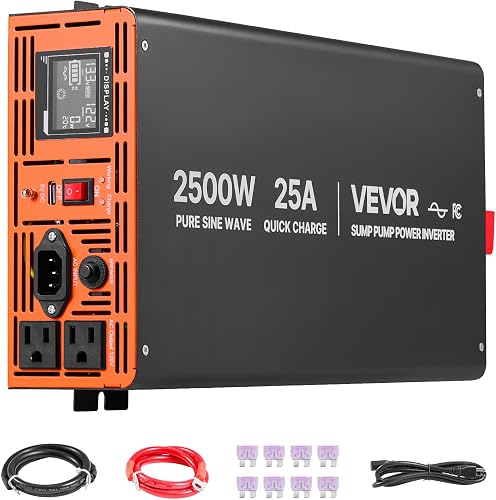
VEVOR 2500W Sump Pump Battery Backup
Best for quick plug-in setup
How we chose battery backup sump pumps
We compared pump flow figures, included controls, battery requirements and inverter features against the needs of someone preparing for a power outage. Our score weighs specs, features and buyer feedback against what you're shopping for.
A pump's flow rate changes with lift height, so compare figures at a head height close to your discharge setup. Inverter wattage describes the power unit, not the amount of water a sump pump can move.
The pump systems here add a separate battery-powered pump. The OLTEANP, PumpSpy, VIOPUMPO and VEVOR options are inverter systems that provide backup power; confirm compatibility with your primary pump before choosing one.
| Product | Best for | Flow at 0 ft lift | Flow at 10 ft lift | Battery | Our score |
|---|---|---|---|---|---|
| Basement Watchdog Special CONNECT Battery Backup | narrow sump pits | 2,500 GPH | 1,730 GPH | Sold separately | 9.1 |
| Wayne ESP25n 12V Battery Backup Sump Pump | a coated steel pump | 2,700 GPH | 1,680 GPH | WSB1275 recommended, sold separately | 9.0 |
| Zoeller Aquanot 508 Battery Backup System | an integrated check valve | Not included | 8.9 | ||
| Liberty Pumps 441 Battery Backup Sump Pump | a mercury-free switch | Not included | 8.6 | ||
| OLTEANP 2500W Sump Pump Battery Backup System | a remote LCD display | Compatible 12V deep-cycle battery required, not included | 8.5 | ||
| PumpSpy 2000W Battery Backup System | two primary pumps | 12V deep-cycle battery required | 8.3 | ||
| VIOPUMPO 2500W Sump Pump Backup System | battery status at a distance | 12V deep-cycle battery required | 8.2 | ||
| Basement Sentry 12V Backup Sump Pump | a built-in alarm system | Deep-cycle battery required, sold separately | 7.9 | ||
| VEVOR 2500W Sump Pump Battery Backup | quick plug-in setup | 12V battery required, not included | 7.8 |
The best battery backup sump pumps for different basements
The strongest match depends on what you need during an outage: a compact backup pump, a specific control feature or battery power for your primary pump. Check the battery requirement before comparing the rest of the features.
Basement Watchdog Special CONNECT Battery Backup: Best for narrow sump pits
- Dual float switch
- Battery fluid sensor
- Compact pump for small or narrow pits
- Battery sold separately
A compact backup pump with a dual float switch, control panel and battery fluid sensor. It fits small or narrow sump pits, but you'll need to supply a battery.
Pros
- Compact pump
- Control panel describes maintenance warnings
- Monitors battery fluid level
Cons
- Battery sold separately
Basement Watchdog is the top pick for a narrow pit because its pump is compact and designed to fit small or narrow sump pits. It includes a dual float switch, controller, charger and battery box, though the battery itself is sold separately.
The control panel lights up with a warning and describes what to do for maintenance. A sensor monitors battery fluid levels, giving you another status point to check as part of routine care.
Its stated flow is 2,500 GPH at 0 ft of lift and 1,730 GPH at 10 ft. Those figures help compare it with the other backup pumps, but your actual discharge height and plumbing affect the fit.
Choose this system if pit space is tight and you want clear maintenance prompts. Make sure the separate battery fits your backup plan and installation space.
Wayne ESP25n 12V Battery Backup Sump Pump: Best for a coated steel pump
- Coated steel and cast iron construction
- Reed float switch
- LED display and audible alarm
- Battery sold separately
This backup pump combines a coated steel body and cast iron base with a reed float switch. Wayne recommends its WSB1275 battery, sold separately.
Pros
- Automatic reed float switch
- LED display and audible alarm
- Top-suction design helps resist clogs
Cons
- Battery sold separately
Wayne suits a buyer who wants a backup pump with a coated steel body and cast iron base. Its reed float switch starts the pump automatically as water rises, while an LED display and audible alarm indicate a problem.
The ESP25n's flow is rated at 2,700 GPH at 0 ft of lift and 1,680 GPH at 10 ft. The top-suction design is intended to help resist clogs from dirt and debris and avoid air lock.
Wayne recommends the WSB1275 battery, which is sold separately. The system is intended for indoor use, so keep it in a suitable indoor sump setup.
Choose Wayne if construction and an audible alert matter to you. Compare its installation dimensions with your pit and the space available around your primary pump.
Zoeller Aquanot 508 Battery Backup System: Best for an integrated check valve
- 12V DC pump
- Integrated check valve
- Quick-disconnect discharge
- Battery not included
The Aquanot 508 pairs a 12V pump with an integrated check valve and quick-disconnect discharge. Check what else your installation needs, including a compatible battery.
Pros
- Integrated check valve
- Quick-disconnect discharge
- Aluminum seal pocket and cooling plate
Cons
- Battery not included
The Zoeller Aquanot 508 stands out for its integrated check valve and quick-disconnect discharge. Those features make it a useful fit when you want the backup system's discharge components built into the pump setup.
Its 12V pump has noncorrosive construction, plus an aluminum seal pocket and cooling plate. The system is listed as a pump unit, so check what else you need for a complete installation, including a compatible battery.
Choose this model if an integrated check valve and quick disconnect fit your plumbing plan. Read our guide to where a sump pump check valve goes before changing the discharge line.
Liberty Pumps 441 Battery Backup Sump Pump: Best for a mercury-free switch
- Automatic mercury-free switch
- Control panel
- 12V charger
- Battery box included; battery not included
The Liberty 441 includes an automatic mercury-free switch, charger and battery box. Its battery is sold separately.
Pros
- Automatic mercury-free switch
- Control panel and charger included
- Battery box included
Cons
- Battery not included
Liberty Pumps includes an automatic mercury-free switch, control panel, 12V charger and battery box. The battery is not included, so account for that when planning the full system.
Its 441 is a high-output 12V submersible pump made to work alongside a primary 120V sump pump. That separate-pump design is different from an inverter system that sends battery power to your existing pump.
Choose the Liberty if the included control panel and automatic switch suit your setup. Check the pit dimensions and plumbing connections before you buy, especially if the primary pump already leaves little room.
OLTEANP 2500W Sump Pump Battery Backup System: Best for a remote LCD display
- 2500W pure sine wave output
- 12V deep-cycle battery required
- Automatic transfer to battery power
- Remote LCD controller
This inverter system is designed to power a sump pump from a 12V deep-cycle battery during an outage. The remote LCD shows battery voltage, load status and operating mode.
Pros
- Remote LCD monitoring
- Automatic transfer to battery power
- 25A charger
Cons
- Battery not included
- Requires AC and DC connections
OLTEANP is an inverter system for buyers who want battery power for a compatible sump pump and a remote way to check status. Its LCD remote controller shows battery voltage, load status and operating mode.
The system provides 2500W pure sine wave output and includes a 25A charger. It transfers from grid power to a 12V deep-cycle battery when utility power fails, and the battery is sold separately.
This option differs from a second pump in the pit. Confirm your primary pump's power needs and the system's connections before choosing an inverter, then plan for ventilation and battery placement.
PumpSpy 2000W Battery Backup System: Best for two primary pumps
- 2000W pure sine wave output
- Two grounded outlets
- Battery required
- Can power two primary pumps within its combined current limit
PumpSpy says the 2000W system can power two primary sump pumps when their combined current draw stays within 16.6A. It requires a 12V deep-cycle battery.
Pros
- Two grounded outlets
- Overcharge prevention and trickle charge
- USB charge port
Cons
- Battery required for backup operation
PumpSpy may fit a setup with two primary pumps, provided their combined current draw stays within 16.6A. It offers 2000W pure sine wave output, two grounded outlets and a USB charge port.
A 12V deep-cycle battery is required for backup operation. PumpSpy says the system switches to battery power during an AC outage and resumes charging when power returns.
Choose PumpSpy if you need to power two pumps and have checked their combined draw. For a single pump, compare its power needs with the inverter's stated limits and your battery plan.
VIOPUMPO 2500W Sump Pump Backup System: Best for battery status at a distance
- 2500W pure sine wave output
- 12V battery system
- Remote LCD controller
- Built-in 25A charger
The VIOPUMPO inverter has a remote LCD for viewing voltage, power and battery charge status. It also includes a 25A charger and cables.
Pros
- Remote LCD controller
- Built-in 25A charger
- Overload and temperature protection
Cons
- Requires a compatible 12V deep-cycle battery
VIOPUMPO offers another inverter option with remote LCD monitoring. The screen can show voltage, power and battery charge status, while the built-in charger supports 25A charging.
The system uses a 12V battery and includes cables and a remote controller. It also has a built-in cooling system and overload, overheat, short-circuit and low-voltage protections.
Choose this unit if remote status information and its stated charger features match your setup. Confirm the battery type and pump requirements before connecting it.
Basement Sentry 12V Backup Sump Pump: Best for a built-in alarm system
- 12V pump and controller
- Alarm system included
- Float switch and charger included
- Battery sold separately
Basement Sentry includes an alarm system, charger, float switch and battery box with its 12V backup pump. You'll need a deep-cycle battery.
Pros
- Alarm system included
- Controller and charger included
- Designed to work alongside a primary 115V pump
Cons
- Battery sold separately
Basement Sentry suits a buyer who wants an alarm system included with a separate backup pump. Its package includes a 12V pump, controller, alarm, battery charger, float switch and battery box.
The system is designed to work in a sump basin alongside a primary 115V pump. A deep-cycle battery is required and sold separately; the brand recommends its own battery.
Choose Basement Sentry if an included alarm and controller help you monitor a backup pump. Check how its parts fit around the primary pump before installation.
VEVOR 2500W Sump Pump Battery Backup: Best for quick plug-in setup
- 2500W pure sine wave output
- 12V battery required
- LCD display and LED indicators
- Plug-in setup
VEVOR describes a plug-in inverter setup with an LCD screen, LED indicators and three-stage charging. A 12V battery is required and not included.
Pros
- Plug-in setup
- LCD and LED status indicators
- Three-stage charging
Cons
- Battery not included
VEVOR's inverter is described as a plug-in setup, with an LCD display, LED indicators and three-stage charging. The screen and indicators show voltage, battery level and working status.
It provides 2500W pure sine wave output and requires a 12V battery, which is not included. VEVOR also describes support for dual-pump operation, so compare the combined load with your pumps' requirements before relying on that setup.
Choose it if plug-in connections and visible status information suit your installation. Check that the battery chemistry and pump load are compatible before connecting the system.
Should you choose a backup pump or an inverter system?
Choose a backup pump when you want a second pump in the sump pit. Choose an inverter when you want battery power to run your existing pump and its electrical load fits the unit.
A separate backup pump has its own float switch and pumping mechanism. It adds parts in the pit, so compare the space it needs with your primary pump and discharge plumbing.
An inverter keeps the primary pump as the water-moving device, but you need to verify its wattage and current requirements. The inverter's output rating doesn't guarantee that every pump can run on it.
Think about alerts, too. A control panel, alarm, LEDs or remote display can help you notice a battery or system issue before an outage.
What should you check before buying a battery backup sump pump?
Check battery compatibility, pit space, discharge height and pump or inverter requirements before you buy. These details determine whether a system can fit and operate with your existing setup.
- Battery: Confirm voltage, chemistry and whether it is included. Most picks here require a separate battery.
- Pit fit: Measure the available space around the primary pump, floats and discharge pipes.
- Lift height: Compare pump flow at a lift height close to your actual discharge.
- Power needs: For an inverter, check the primary pump's electrical requirements and any combined load.
- Alerts and controls: Decide whether you want a panel, audible alarm, battery sensor or remote display.
- Installation: Follow the manufacturer instructions for wiring, plumbing and battery placement.
A battery backup only helps when the battery is charged and the system is ready. Our guide to testing a sump pump before the next storm includes a check of the backup and its battery.
How can you plan battery runtime?
Runtime depends on battery capacity, pump power draw and how often the pump cycles. A larger battery may store more energy, but no single runtime figure applies to every basement.
Start with the pump's power needs and the battery maker's usable capacity. Then consider how often water enters the pit and how many hours an outage could last.
A backup pump may cycle only when water reaches its float switch. An inverter system can also depend on the primary pump's cycling pattern and the inverter's own power use.
Use the sump pump backup battery size guide to compare battery choices. Keep the battery charged and follow the system maker's care instructions.
How do you keep a battery backup ready?
Check the battery and backup system on a regular schedule, and follow the maker's instructions for the control panel, charger and pump. Replace or service parts when the system signals a problem.
Look for warning lights, low battery status, corrosion or a loose connection. Keep the sump pit clear enough for the float switches to move, and make sure discharge pipes remain open.
Test the backup pump or inverter using the maker's directions. A backup system that has never been checked may not be ready when the primary pump loses power.
For early warning when water rises or a system has an issue, see our picks for sump pump alarms. An alarm can add notification, while the backup system provides pumping or power.
Which battery backup sump pump should you choose?
Choose the Basement Watchdog Special CONNECT for a compact pump and maintenance prompts, or Wayne if you want coated steel construction with an LED display and audible alarm. Pick an inverter only after confirming it can power your primary pump and that you have a compatible battery.
If you're still comparing backup styles, start with whether a battery backup sump pump is worth it and check your battery needs before deciding.
Our top 3 picks at a glance
-
1
Best for narrow sump pits
Basement Watchdog Special CONNECT Battery Backup
9.1/10 our score
See it on Amazon -
2
Best for a coated steel pump
Wayne ESP25n 12V Battery Backup Sump Pump
9.0/10 our score
See it on Amazon -
3
Best for an integrated check valve
Zoeller Aquanot 508 Battery Backup System
8.9/10 our score
See it on Amazon
Frequently asked questions
Does a battery backup sump pump replace the primary pump?
A battery backup is a secondary layer of protection. Backup pump systems sit alongside a primary sump pump, while inverter systems can supply battery power to a compatible primary pump.
Check the product and your pump's requirements to confirm which setup you have.
Do battery backup sump pumps include a battery?
Most of these picks require a separate battery. The Basement Watchdog, Wayne, Zoeller, Liberty Pumps, Basement Sentry and VEVOR systems all need a battery that isn't included.
Check the required battery type and voltage before buying, then plan where it will sit.
How do I choose between a backup pump and an inverter?
A backup pump adds a separate battery-powered pump to the sump pit. An inverter supplies battery power to a compatible primary pump.
Choose based on your existing setup, the pump's power needs and whether you want a separate pump or backup power for your current one.
How can I estimate how long a battery will run my sump pump?
Runtime depends on the battery's capacity, the pump's draw and how often it cycles. A battery's stated amp-hour capacity alone doesn't give a reliable runtime for your basement.
For a closer estimate, compare the pump's power use with the battery maker's usable capacity and account for cycling.
How should I check a backup sump pump?
Follow the system's manual for setup and maintenance, and check its control panel or alarm for warnings. Test the pump and switch using the maker's instructions before storm season.
Our sump pump battery test guide covers a safe check of the full system.


