Where Does a Sump Pump Check Valve Go?
A sump pump check valve goes in the discharge pipe above the pump, usually a short distance above the sump pit. Install it in the direction marked on the valve so water can leave the pump but does not drain back into the basin.
On this page (8 sections)
- Where does a sump pump check valve go in the pipe?
- Which way should the check valve face?
- How much space should you leave around the valve?
- Can a check valve be horizontal?
- What should you check before installing the valve?
- What does a check valve prevent?
- How do you know if the valve is installed in the right place?
- Where should your sump pump check valve go?
A sump pump check valve goes in the discharge pipe above the pump, usually a short distance above the sump pit. Install it in the direction marked on the valve so water can leave the pump but does not drain back into the basin.
The valve divides the discharge pipe into the pump side and the outlet side. Its job is to limit water in the pipe from falling back into the pit when the pump stops.
Before cutting pipe, check the valve instructions, the pump manual, pipe size, and available clearance. A valve that fits the space but points the wrong way can block discharge instead of helping it.
Where does a sump pump check valve go in the pipe?
Place the check valve in the vertical discharge pipe above the pump, between the pump outlet and the point where the discharge route continues away from the pit. Keep it accessible so you can inspect or replace it later.
The exact height depends on the pump and valve instructions, the pipe layout, and the space around the pit. Avoid burying the valve behind a finished wall or other permanent cover.
A useful starting point is to identify the pump outlet and trace the pipe upward. The valve belongs on that route, with its flow marking pointing away from the pump.
For context on the pump's path through the basin and discharge line, read how a sump pump works. The valve is one part of that route, not a substitute for a clear discharge line.
Which way should the check valve face?
The valve's arrow should point in the direction water is pumped, away from the pump and toward the discharge outlet. The arrow is the clearest guide when you are unsure which side connects to the pump.
A check valve that faces backward can stop the pump from sending water out. If there is no visible arrow, consult the valve's instructions instead of guessing from its shape.
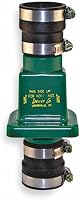
Some models support more than one orientation. Zoeller says its 30-0181 can be installed vertically or horizontally, but the flow direction still needs to match the discharge route.
Check your pipe connection before choosing a valve. This Zoeller model uses slip connections, so it suits a layout where those connections match the existing pipe and installation method.
How much space should you leave around the valve?
Leave enough room to reach the valve, its connections, and any clamps or fasteners. Check its dimensions against the pit cover, nearby walls, and the pump's discharge pipe before you cut.
The valve should remain visible or reachable for inspection. If you need to check for water movement or replace a worn part, access is easier when the valve is not trapped behind a fixed cover.
A compact space may affect the kind of valve connection that works. The PumpSpy CV-150 includes rubber couplings and stainless steel clamps, and it fits within a 5-1/8 in gap.
PumpSpy describes the clear body as a way to see water movement through the valve. That can make a visual check easier when the valve is reachable and the pipe is in view.
Measure the gap before buying and confirm that the pipe size and connection method match your setup. If the pipe is hidden or hard to reach, plan an access point before closing the area around it.
Can a check valve be horizontal?
Some sump pump check valves can be installed horizontally, but follow the instructions for the model you have. Do not assume every valve works in every position.
The Zoeller 30-0181 supports vertical or horizontal installation. For other valves, check the position guidance before laying out the pipe or cutting it.
Whichever orientation you use, preserve the flow direction and leave the valve accessible. A horizontal pipe run still needs the arrow to point away from the pump.
What should you check before installing the valve?
Confirm pipe size, flow direction, connection type, and available clearance before installation. Then follow the pump and valve instructions for assembly and support.
A valve's nominal size is only one part of fit. The pipe may use slip, threaded, or coupling connections, so make sure the pieces join in the way your setup requires.
The Wayne 1-1/2 in Check Valve Kit is described for Wayne sump and sewage pumps. Its threaded connection type makes it worth checking against the threads and pipe arrangement already in place.
Check the pump model and the connection details before selecting this kit. If your pump or pipe does not match, choose a valve designed for the actual fittings in your discharge line.
For pump selection questions beyond the valve, start with the sump pump buying guide. It covers pump, backup, valve, and care choices in one place.
What does a check valve prevent?
A check valve helps keep water in the discharge pipe from falling back into the sump basin. That can reduce the amount of water the pump needs to move again when it starts.
Water falling back through the pipe can also make noise when it hits the valve. The PumpSpy valve uses a spring-loaded flapper, which PumpSpy describes as helping reduce water-hammer noise.
A check valve does not clear a clog or correct a pump that cannot keep up with incoming water. If the pump runs too often, inspect the pit, float, and discharge route as part of the diagnosis.
For help matching valve features to your setup, compare check valves for sump pump discharge lines. That guide focuses on valve choices rather than placement.
How do you know if the valve is installed in the right place?
The valve is in the right place when it sits in the discharge line above the pump, points toward the outlet, and remains reachable for inspection. The pump and valve instructions take priority on model-specific placement.
After installation, observe a normal pump cycle if it is safe to do so. Water should travel away from the basin, and the pump should stop when the water level falls according to its controls.
If water visibly drains back into the basin or the pump struggles to discharge, check the arrow, connections, and pipe route. Turn off power before handling the pump or opening a connection, and get qualified help if the wiring or plumbing is unclear.
Pit dimensions also affect the space available for the pump, pipe, and valve. See how deep a sump pit should be when planning a new or revised layout.
Where should your sump pump check valve go?
Put the valve above the pump in the discharge line, with its arrow facing away from the basin. Choose a vertical or horizontal position only if the valve instructions allow it, and keep it accessible.
Choose a valve based on pipe size, connections, and clearance. The Zoeller supports vertical or horizontal installation, PumpSpy adds a clear body and couplings for 1-1/2 in Schedule 40 pipe, and Wayne describes its kit for Wayne sump and sewage pumps.
For valve options, visit our sump pump check valve guide. If you are planning the whole system, use the sump pump buying guide to compare the other parts you may need.
Frequently asked questions
Where should a sump pump check valve be installed?
Install the check valve in the pump's discharge pipe above the sump pit, where it can stop water in the pipe from flowing back into the basin. Follow the valve's flow arrow and the pump and valve instructions for the exact position, pipe size, and connection method.
Does a sump pump check valve go above or below the pump?
The valve goes above the pump in its discharge line, not below the pump. It needs to sit between the pump outlet and the rest of the discharge route so water leaving the pump passes through it before traveling away from the pit.
Can a sump pump check valve be installed horizontally?
Some valves allow horizontal installation, while others may require a specific position. Check the instructions and any flow-direction marking for your valve before cutting the pipe; the Zoeller 30-0181 is described for vertical or horizontal installation.
Which way should a sump pump check valve face?
Point the valve's flow arrow away from the pump and toward the discharge route. The valve should allow pumped water to move out of the pit and close against water trying to fall back into the basin; confirm orientation against the valve instructions.