What Size Battery Do You Need for a Sump Pump Backup?
Most battery backup sump pumps use a 12V deep-cycle battery, but the right capacity depends on your system and how long you need it to run. Check the pump maker’s approved battery type, capacity range and charging requirements before buying.
On this page (9 sections)
- What size battery for a sump pump backup should you choose?
- How do voltage and amp-hours affect battery choice?
- Which battery type does your backup system need?
- How long can a 75Ah sump pump battery last?
- Which 12V 75Ah battery options are worth comparing?
- How can you estimate the backup time you need?
- What should you check before replacing a battery?
- What is the safest way to maintain a backup battery?
- Which sump pump backup battery should you choose?
Most battery backup sump pumps use a 12V deep-cycle battery, but the right capacity depends on your backup system and how long you need it to run. Check the system maker’s approved battery type, capacity range and charging requirements before you buy.
A 75Ah battery is a common size in the examples here, but it is not right for every system. The backup pump, charger and battery must be compatible as a set.
If you’re still choosing a backup, start with our battery backup sump pump picks. This guide covers how to match a battery to the system you already have.
What size battery for a sump pump backup should you choose?
Choose the battery your backup system supports, using its manual to confirm voltage, battery chemistry and capacity. A higher amp-hour rating may provide more stored energy, but it doesn’t guarantee a longer runtime if the system cannot charge or use that battery properly.
Many sump pump backups use a 12V battery. The examples below are 12V or described for 12V use, with capacity details varying by product.
| Battery | Voltage | Capacity detail | Useful fit |
|---|---|---|---|
| Wayne WSB1275 | 12V | 75Ah | Wayne backup systems and other compatible Wayne setups |
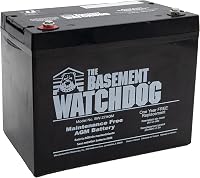
| Basement Watchdog BW-27AGM | Not specified in the product details here | Not specified | Compatible Basement Watchdog systems |
| Mighty Max ML75-12 | 12V | 75Ah | Described for the Wayne ESP25 backup pump |
| PumpSpy PS1275 | 12V | 75Ah | PumpSpy monitoring system and compatible backups |
The Basement Watchdog battery has runtime claims for specific compatible systems, but the details here do not give its voltage or Ah capacity. Check the battery and backup system manuals before using it as a replacement.
How do voltage and amp-hours affect battery choice?
Voltage must match the backup system, while amp-hours describe the battery’s rated capacity. Neither number alone tells you whether a battery will fit, charge correctly or provide the runtime you need.
A 12V system requires a battery voltage the manufacturer approves. Don’t choose a different voltage because it appears to offer more capacity.
Amp-hours, or Ah, help compare capacity among batteries with compatible voltage and chemistry. A 75Ah battery stores a rated amount of charge, but actual runtime depends on how much power the pump draws and how often it runs.
The pump may run only briefly during light inflow, then cycle more often during heavy rain or rising groundwater. Battery age, temperature, charging state and the pump’s workload also affect how long backup power lasts.
Use the maker’s runtime chart for your exact system when one is available. Don’t turn an Ah rating into a fixed number of hours without the pump’s power draw and duty cycle.
Which battery type does your backup system need?
Choose the battery chemistry named in your system manual. Sealed lead-acid, AGM and flooded batteries have different care and charging needs, so the same voltage and capacity do not make them interchangeable.
An AGM battery is a type of sealed lead-acid battery. The Wayne WSB1275 is described as a sealed lead-acid battery, while PumpSpy describes its PS1275 as AGM.
Mighty Max describes its ML75-12 as sealed lead-acid and maintenance free.
Maintenance-free batteries do not need routine water additions, according to the product information for these examples. That can simplify upkeep, but you still need to inspect the system and follow its charging instructions.
The Basement Watchdog maker notes that some older systems can give false alarms when paired with a maintenance-free battery if the system is not compatible. Confirm your system’s model and battery requirements before changing battery type.
How long can a 75Ah sump pump battery last?
A 75Ah battery’s runtime depends on the backup pump’s load and cycling, so capacity alone cannot give an exact number of hours. Look for a runtime estimate tied to your pump and expected duty cycle.
The Basement Watchdog battery has stated runtime estimates for certain systems, based on a 10% duty cycle. Those estimates vary by system, so they should not be applied to another pump or battery setup.
For other batteries here, no runtime estimate is provided. Don’t assume that 75Ah batteries from different brands will run your backup for the same length of time.
To plan for an outage, think about how often your primary pump runs and how quickly water enters the pit during heavy rain. If the pump cycles frequently, battery backup may run down sooner than it would under lighter conditions.
A battery backup system with an alarm can help you notice a power or battery issue. Our guide on why a Basement Watchdog sump pump beeps explains some common alert causes.
Which 12V 75Ah battery options are worth comparing?
These 12V 75Ah options suit different compatibility needs; choose based on your system manual, battery chemistry and included setup details. The Basement Watchdog option is included for compatible systems, though its voltage and Ah capacity are not specified here.
Wayne WSB1275: for compatible Wayne systems
The Wayne WSB1275 is a 12V, 75Ah sealed lead-acid battery described for the Wayne ESP25, WSS30VN, WBPS50 and other Wayne battery backup systems.
Wayne describes it as maintenance free, with no need to mix acid or add water. Check your system model against Wayne’s compatibility guidance before choosing it.
Basement Watchdog BW-27AGM: for compatible Watchdog systems
The Basement Watchdog BW-27AGM is a maintenance-free AGM battery for compatible Basement Watchdog systems. Its maker gives runtime estimates for several specific systems at a 10% duty cycle.
Compatibility can depend on the age and model of the backup system. The maker warns that using a maintenance-free battery with some older non-compatible systems may cause false alarms.
Mighty Max ML75-12: for a compatible Wayne ESP25 setup
The Mighty Max ML75-12 is a 12V, 75Ah sealed lead-acid battery described for the Wayne ESP25 backup pump. It is rechargeable and maintenance free.
The battery comes with screws, while a wire harness and mounting accessories are not included. Check that your backup system supports this battery and that you have the connection parts it requires.
PumpSpy PS1275: for PumpSpy monitoring setups
The PumpSpy PS1275 is a 12V, 75Ah AGM battery that PumpSpy recommends for its sump pump monitoring system. The brand also describes it as compatible with most other battery backup sump pumps.
Confirm compatibility with your exact backup unit before buying. A broad compatibility statement does not replace the voltage, chemistry and charging limits in your system manual.
How can you estimate the backup time you need?
Estimate how long the battery may need to carry the backup pump during a likely outage, then compare that need with a runtime chart for your system. Your local water conditions and pump cycling matter more than a generic hours claim.
Start by checking how often the primary pump cycles during ordinary weather and during a heavy storm. If it runs frequently when the pit fills, the backup may also work harder during a power outage.
Next, check the backup system’s runtime information for the battery it supports. Use the specific pump model and duty-cycle conditions shown in the manual or manufacturer guidance.
Don’t assume an advertised runtime applies to every home. A 10% duty cycle means the pump runs for part of the measured period, not continuously, and a different inflow rate can change the result.
If outages in your area can last longer than the battery’s estimated runtime, consider what other backup methods the system maker supports. A generator or second backup option must be used according to its own safety instructions.
What should you check before replacing a battery?
Before buying, confirm voltage, chemistry, capacity range, terminals and physical fit against the system manual. These checks help prevent a battery that cannot connect or charge as intended.
- Find the backup pump’s model number and manual.
- Confirm the required battery voltage and approved chemistry.
- Check the allowed capacity range and charging limits.
- Compare terminal type and cable arrangement with the battery.
- Measure the battery space and check the required ventilation.
- Follow the maker’s steps for disconnecting and testing the backup.
A battery can be the right voltage and still be incompatible because of its chemistry or charging needs. Contact the system maker if the manual does not name a battery type or capacity range.
After installation, use the backup system’s test procedure. Our guide to testing a sump pump and its battery backup covers checks to make before the next storm.
What is the safest way to maintain a backup battery?
Follow the battery and backup system makers’ instructions for charging, inspection and replacement. Don’t open a sealed battery or add water unless its instructions specifically call for it.
Keep connections clean and secure, and check for visible damage, swelling or corrosion. If you see damage or smell unusual fumes, stop and follow the system maker’s guidance.
A backup battery needs routine attention even when it is maintenance free. Check its alarm or status indicators, then perform the system test on the schedule in the manual.
Which sump pump backup battery should you choose?
Choose the battery approved for your backup system, then use capacity and runtime information to decide whether it fits your outage needs. Pick the Wayne WSB1275 or Mighty Max ML75-12 for a compatible Wayne setup, the Basement Watchdog battery for a compatible Watchdog system, or the PumpSpy PS1275 for a PumpSpy setup.
If you’re weighing the cost and protection of a backup system, read whether a battery backup sump pump is worth it. For a system already installed, use its manual and the sump pump backup picks guide to check compatibility before replacing the battery.
Frequently asked questions
What size battery is best for a sump pump backup?
Start with the backup system maker’s battery requirements. Many systems are designed for 12V batteries, but the approved type and capacity range vary.
A 75Ah battery is one option among these examples, not a universal fit.
Check the manual for voltage, chemistry, terminals and charging limits before buying.
How long will a 75Ah battery run a backup sump pump?
A 75Ah label alone cannot predict runtime. How often the pump runs, how much water it moves, the system’s power draw, battery condition and charging state all matter.
Use the backup system maker’s runtime chart for your pump and battery combination, and plan for your own water conditions.
Can I use a car battery for a sump pump backup?
Use only a battery type approved by the backup system maker. A car battery may not suit a system designed for deep-cycle use, and an incompatible battery can affect charging or operation.
Check the manual for battery chemistry, voltage, capacity and any restrictions before substituting a different type.
Can I use any 12V battery with a sump pump backup?
No. Matching voltage does not guarantee compatibility.
Confirm the battery chemistry, capacity range, terminal setup and charging requirements in the system manual.
Some systems also have compatibility limits for maintenance-free batteries, so check those details before replacing the battery.
How often should I check a sump pump backup battery?
Follow the system maker’s inspection and replacement schedule, and check the backup system before storm season. Look for alerts, corrosion, loose connections or visible damage, and use the system’s test procedure.
A working alarm or indicator does not by itself prove the battery can handle a long outage.