Best 1 HP Submersible Sump Pumps: Top 9 Picks (November 2026)
The best 1 HP submersible sump pumps include the AQUASTRONG 1 HP Sump Pump 4500 GPH for whole-basement water removal, the LANCHEZ Sump Pump for high-volume automatic draining, and the Zoeller M53 Mighty-Mate 1/3 HP Sump Pump for small pits in steady-duty basements.
On this page (8 sections)
- The best 1 HP submersible sump pumps for different pits
- How these 1 HP submersible sump pumps were compared
- What flow rate do you need from a 1 HP sump pump?
- Should you pick an automatic or a manual 1 HP pump?
- What does maximum head mean for a basement discharge run?
- How much solids should a 1 HP sump pump handle?
- Which build material holds up in a wet pit?
- Verdict: which 1 HP submersible sump pump should you buy?
The best 1 HP submersible sump pump for most homes is the AQUASTRONG 1 HP 4500 GPH, a manual pump that moves 75 gallons per minute and lifts water 30 ft. Pick the Wayne CDU1000 when you want a 1 HP pump that switches on by itself in the pit.
A 1 HP pump is a lot of motor for a typical basement. It earns its keep where water arrives fast, the pit is deep, or the discharge pipe has to push water up a long climb.
For slower seepage, a smaller pump often does the same job with less power draw. Our guide to 1/3 or 1/2 HP sump pump sizing helps you judge whether 1 HP is more than you need.
This list mixes manual 1 HP workhorses with a few lower-power automatic pumps, so you can match the pump to your pit and your water load. If your pit needs an automatic switch and you also want a backup plan, the submersible sump pump for home use guide covers the wider field.
Our picks at a glance
-
1
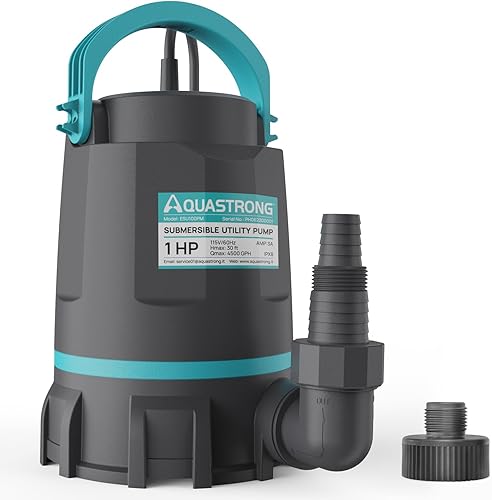 Best for whole-basement water removal
AQUASTRONG 1 HP Sump Pump 4500 GPH
9.7/10 our score
See it on Amazon -
2

-
3
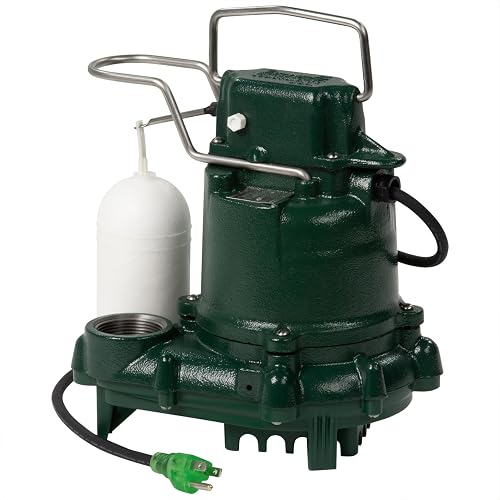 Best for small pits in steady-duty basements
Zoeller M53 Mighty-Mate 1/3 HP Sump Pump
9.2/10 our score
See it on Amazon
- 4
 Check it
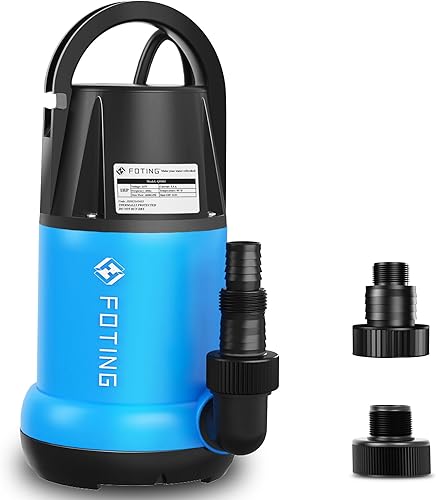
FOTING 1HP Sump Pump 4600GPH Clean/Dirty Submersible
Best for draining pools and flooded rooms - 5
 Best for narrow pits and easy replacementCheck it
- 6
 Best for versatile water transferCheck it
- 7
 Check it
Wayne CDU1000 1 HP Cast Iron Sump Pump
Best for automatic 1 HP pit duty - 8
 Check it
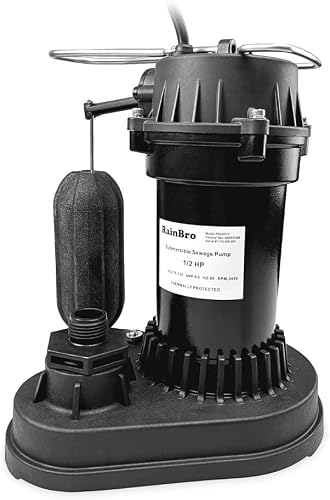
Rainbro 1/2 HP Thermoplastic Submersible Sump Pump
Best for moderate, steady basement drainage - 9
 Best for shallow water and small jobsCheck it
The best 1 HP submersible sump pumps for different pits
The top score goes to the pump that covers the most common 1 HP job: fast water removal from a flooded basement or a pit that fills quickly. Every other pick is the best choice for a named need, whether that's automatic operation, a narrow pit or a small pump that still lifts high.
AQUASTRONG 1 HP Sump Pump 4500 GPH: Best for whole-basement water removal
- 75 gpm at 5 ft
- 30 ft maximum lift
- Handles solids up to 1/5 in
- 10 ft UL power cord
A manual 1 HP pump with strong flow and a bottom suction that drains down to 1/5 inch. Best as a fast mover for flooded spaces and pits.
Pros
- High flow for its size
- Drains to 1/5 inch
- Thermal overload protector
Cons
- Manual on and off, no float switch
- Needs a separate switch for automatic pit duty
AQUASTRONG takes the top spot for buyers who need a lot of water moved without fuss. The motor moves 75 gallons per minute at 5 ft of lift and can push water up to 30 ft, which covers a deep basement discharge run.
The bottom suction drains down to 1/5 inch from the surface, so it clears standing water rather than leaving a shallow layer behind.
It's built for grab-and-go work. Plug it in and it runs; unplug it and it stops.
The thermoplastic casing resists corrosion, and the built-in thermal overload protector keeps the motor from burning out if it runs dry. A 10 ft UL power cord gives you reach without an extension cord.
The trade-off is manual control. In a sump pit that needs to pump on its own, this pump needs a separate switch.
For one-off floods, window wells or emptying a pit by hand, that simplicity works in its favor. Check the exact outlet sizes before you order fittings.
LANCHEZ Sump Pump: Best for high-volume automatic draining
- 91.7 gpm
- 30 ft maximum lift
- Float switch, starts at 5.3 in
- Stainless steel body, 16 ft cord
The highest flow in this group, with a built-in float switch and stainless steel housing. A strong fit for big pits that fill fast.
Pros
- Highest flow rate here
- Automatic float switch
- Passes solids up to 4/5 in
Cons
- Higher horsepower than the 1 HP keyword calls for
- Starts at a higher water level than most
LANCHEZ offers the most flow among the manual pumps here at 91.7 gallons per minute. The 1.6 HP motor sits in a stainless steel body rated IPX8, and the pump handles particles up to 4/5 inch, which makes it a fit for pits that collect debris.
The float switch starts the pump when water reaches about 5.3 inches.
That automatic switch means you can leave it in a pit and let it do the work. The 16 ft power cord reduces the need for an extension cord, and the top handle makes it easy to lift out for cleaning.
The bottom impeller is PA66, and the mechanical seal helps prevent leaks over time.
The higher horsepower is the trade-off against the 1 HP keyword. It draws more current than a true 1 HP unit, so confirm your circuit can handle it.
The higher start level also means a shallower flood may sit until the water rises to the switch.
Zoeller M53 Mighty-Mate 1/3 HP Sump Pump: Best for small pits in steady-duty basements
- Vortex impeller
- Cast iron motor and housing
- Snap action float switch
- LED power plug
A lower-power pump that still earns a top score for buyers with modest inflow and a small pit. The vortex impeller shrugs off solids.
Pros
- Non-clogging vortex impeller
- Cast iron build
- LED plug shows power at a glance
Cons
- 1/3 HP, not 1 HP
- Lower lift than the 1 HP models
Zoeller earns its score on reliability rather than raw power. The 1/3 HP Mighty-Mate uses a vortex impeller that handles solids without clogging, a design that matters in pits where debris slips past the screen.
The cast iron motor and housing give it weight and durability that thermoplastic models can't match.
The snap action float switch runs the pump automatically, and the LED power plug lets you check for power at a glance. Maximum lift is 19.25 ft, so it suits a basement with a moderate discharge run.
The pump is factory-tested in water before shipping.
Choose it for a small pit in a basement with steady but modest inflow. The 1/3 HP motor won't keep up with a fast-rising flood the way a 1 HP pump will.
If your water load is heavy, step up to one of the 1 HP models here. Read our comparison of pedestal vs submersible sump pumps if you're still choosing between pump styles.
FOTING 1HP Sump Pump 4600GPH Clean/Dirty Submersible: Best for draining pools and flooded rooms
- 76 gpm at 5 ft
- 31 ft maximum lift
- Removable bottom
- 10 ft power cord
A manual 1 HP pump with a removable base for cleaning and a slightly higher lift than the top pick. A practical tool for one-off water removal.
Pros
- 31 ft maximum head, matching the highest here
- Removable bottom for cleaning
- Rounded carry handle
Cons
- Manual only, no auto start and stop
- Needs a switch to run unattended in a pit
FOTING is the manual 1 HP pump to pick when your job is draining something big. It moves 76 gallons per minute at 5 ft and lifts water up to 31 ft, tied for the highest head in this group.
The bottom suction removes water down to 1/5 inch, which helps when you're emptying a pool, hot tub or flooded room.
The removable bottom is the practical detail. Four screws release it so you can clean out debris and keep the pump running longer.
A rounded handle makes it comfortable to carry between jobs, and the thermoplastic housing resists corrosion.
It's a manual pump. You plug it in to start and unplug it to stop, so it doesn't run on its own in a pit.
That's the main trade-off against the automatic Wayne. For pool draining, emergency water removal and window wells, the manual control and the extra lift make it a strong tool.
Submerge it at an angle so trapped air can escape before it runs.
Wayne CDU790 1/3 HP Sump Pump: Best for narrow pits and easy replacement
- Top suction design
- Vertical float switch
- Cast iron volute
- Pumps up to 4600 GPH at 0 ft
A compact pump with a vertical float that fits tight basins. Top suction resists air lock and clogs.
Pros
- Fits pits 11 in or wider
- Float switch tested to 1 million cycles
- Top suction reduces air lock
Cons
- 1/3 HP, so lower flow than the 1 HP models
- Indoor use only
Wayne's CDU790 is the pump for a tight pit. The vertical float switch saves space, so the pump fits in basins 11 inches or wider.
Top suction pulls water from above the bottom debris layer, which reduces air lock and clogging. Installation takes about 15 minutes and needs no weep hole.
It's a 1/3 HP pump, so it won't match a 1 HP model on raw flow. It still moves up to 4600 GPH at 0 ft and 63 gallons per minute, enough for many basements during heavy rain or snow melt.
The cast iron volute and epoxy-coated steel housing give it long life, and the float switch is tested to 1 million cycles.
The low power draw is a plus for a pump that runs often. The trade-off is capacity: a fast-filling pit can outrun a 1/3 HP motor.
Pick it for a narrow basin with steady inflow, and step up to a 1 HP pump if your pit fills fast. Our explainer on what a pedestal sump pump is helps if you're weighing that style too.
Acquaer 1HP Sump Pump: Best for versatile water transfer
- 72.4 gpm
- 30 ft maximum lift
- Handles 1/5 in solids
- 9.8 ft UL power cord
A manual 1 HP pump with a multi-outlet adapter that fits several hose sizes. A flexible choice for basements, tubs and garden watering.
Pros
- Three outlet adapter sizes
- Drains to 1/5 inch
- Thermal overload protector
Cons
- No float switch
- Two-year warranty is shorter than some rivals
Acquaer suits buyers who move water in more than one place. The 1 HP motor moves 72.4 gallons per minute and lifts water 30 ft, with a low suction base that drains to 1/5 inch.
The multi-outlet adapter includes a 1-1/2 inch elbow and snap couplings for 3/4, 1 and 1-1/4 inch hoses, so you can match the hose to the flow you need.
The thermoplastic casing resists corrosion, and the carrying handle keeps it portable between jobs. A mechanical seal helps prevent leaks, and the thermal overload protector guards the motor during dry runs.
The 9.8 ft UL cord gives you a safe reach from the outlet.
It's manual, so it won't run automatically in a pit. The 2-year warranty is also shorter than the 5-year cover on the Wayne CDU1000.
For basements, tubs, ponds and garden watering, the outlet flexibility and low suction make it a handy all-rounder. Avoid running it dry or letting it freeze in winter.
Wayne CDU1000 1 HP Cast Iron Sump Pump: Best for automatic 1 HP pit duty
- 102 gpm
- Integrated vertical float switch
- Cast iron and stainless steel build
- 5-year warranty
The only 1 HP pump here with a built-in vertical float, so it runs on its own in a pit. Best for high-inflow basements that need automatic protection.
Pros
- Built-in automatic float switch
- Highest flow here at 6100 GPH
- Fits narrow pits
Cons
- 10 ft head is the lowest in this group
- Pricier than manual 1 HP options
The Wayne CDU1000 is the 1 HP pick for a pit that needs to protect itself. Its integrated vertical float switch runs the pump automatically and fits narrow basins.
The 1 HP motor moves up to 6100 GPH, the highest flow in this group, and the cast iron and stainless steel build resists corrosion.
Top suction reduces air lock and clogging without a weep hole. The 1-1/2 inch NPT discharge meets standard building codes.
Wayne assembles it in the USA and backs it with a 5-year warranty, the longest here. A vertical float keeps the switch clear of debris better than a tethered float in a tight pit.
The trade-off is lift. Maximum head is 10 ft, the lowest in this group, so it suits a basement where the discharge run is short.
For a deep climb, a manual pump with more head does better. For automatic 1 HP protection in a normal pit, this is the one to get.
If you're still sizing your pump, our 1/3 or 1/2 HP guide covers the smaller end of the range.
Rainbro 1/2 HP Thermoplastic Submersible Sump Pump: Best for moderate, steady basement drainage
- 56 gpm
- 31 ft maximum lift
- Vertical float switch
- 10 ft cord
A 1/2 HP auto pump with a vertical float and a 31 ft lift. Suits basements where inflow is steady but not heavy.
Pros
- Automatic vertical float
- 31 ft maximum head
- Thermal overload protection
Cons
- 1/2 HP, lower flow than 1 HP models
- Needs a pit 14 in or wider
Rainbro is the automatic pump for basements where water arrives at a steady pace. The 1/2 HP motor moves 56 gallons per minute and lifts water up to 31 ft, and the vertical float switch runs the pump as the water level changes.
The switch starts the pump at about 10 inches and shuts it off when the water drops.
The pump handles clean and slightly dirty water. It drains to a low point and has a thermal overload protector that shuts the motor down if it overheats.
Two outlet sizes, 3/4 inch and 1-1/2 inch, let you match the hose to the flow you want.
The 1/2 HP motor is the main trade-off. It won't keep up with a fast flood the way a 1 HP pump will, and it needs a pit 14 inches or wider.
For a basement with steady seepage and a wide basin, the automatic switch and high lift make it a dependable choice.
Lanchez Sump Pump: Best for shallow water and small jobs
- 38.35 gpm
- 31 ft maximum lift
- Oil-filled motor
- Drains to 1/5 inch
A compact 1/2 HP pump with a side inlet and a low suction point. Best for light water removal where a 1 HP pump would be overkill.
Pros
- Drains down to 1/5 inch
- Compact and light
- Handles clean or slightly dirty water
Cons
- Lowest flow in this group
- 1/2 HP, not a fit for heavy inflow
Lanchez is the light-duty option for small water jobs. The 1/2 HP pump moves 38.35 gallons per minute and lifts water up to 31 ft.
Its oil-filled motor helps prevent overload and extends run life, and the side inlet with a metal filter keeps debris away from the internals.
It drains water down to 1/5 inch from the surface, so it clears shallow puddles and low spots. The compact body is easy to move and store, and the 10 ft cord gives you a safe reach.
It's built for clean or slightly dirty water in pools, basements, ponds, rain barrels and hot tubs.
The low flow is the trade-off. At 38 gallons per minute, it's the slowest pump here, so it suits small jobs rather than a fast-rising pit.
For light water removal where a 1 HP pump would be overkill, its low suction and portability make it the practical pick. A 3-year technical support term backs it.
How these 1 HP submersible sump pumps were compared
We scored each pump on the specs that decide real basement work: flow rate, maximum head, solids handling, switch type, build material and warranty. Our score weighs specs, features and buyer feedback against what you're shopping for.
The first question was automatic or manual. A pump with a built-in float switch protects a pit on its own.
A manual pump costs less to run and gives you full control, but you have to be there to switch it on. That split shaped the ranking more than horsepower alone.
Next came the lift. A pump rated 4500 GPH at 5 ft moves less water once the discharge pipe climbs.
We weighed the maximum head against the flow, so a pump with a long climb doesn't score well just for a big headline number.
Solids handling mattered for pits that collect debris. Pumps rated for 1/5 inch solids suit sandy or dirty water.
The models that pass larger particles scored better for messy pits but drew more power.
Finally, build and warranty. Cast iron and stainless steel bodies resist corrosion better than thermoplastic.
A longer warranty, like Wayne's 5 years on the CDU1000, counts for buyers who want a pump to last through several seasons.
| Product | Best for | Horsepower | Flow rate | Maximum head | Our score |
|---|---|---|---|---|---|
| AQUASTRONG 1 HP Sump Pump 4500 GPH | whole-basement water removal | 1 HP | 75 gpm | 30 ft | 9.7 |
| LANCHEZ Sump Pump | high-volume automatic draining | 1.6 HP | 91.7 gpm | 30 ft | 9.3 |
| Zoeller M53 Mighty-Mate 1/3 HP Sump Pump | small pits in steady-duty basements | 1/3 HP | 19.25 ft | 9.2 | |
| FOTING 1HP Sump Pump 4600GPH Clean/Dirty Submersible | draining pools and flooded rooms | 1 HP | 76 gpm | 31 ft | 8.9 |
| Wayne CDU790 1/3 HP Sump Pump | narrow pits and easy replacement | 1/3 HP | 63 gpm | 20 ft | 8.8 |
| Acquaer 1HP Sump Pump | versatile water transfer | 1 HP | 72.4 gpm | 30 ft | 8.7 |
| Wayne CDU1000 1 HP Cast Iron Sump Pump | automatic 1 HP pit duty | 1 HP | 102 gpm | 10 ft | 8.5 |
| Rainbro 1/2 HP Thermoplastic Submersible Sump Pump | moderate, steady basement drainage | 1/2 HP | 56 gpm | 31 ft | 8.2 |
| Lanchez Sump Pump | shallow water and small jobs | 1/2 HP | 38.35 gpm | 31 ft | 8.1 |
What flow rate do you need from a 1 HP sump pump?
Start with how fast water enters your pit. A 1 HP pump rated around 4500 GPH is built for a pit that fills quickly during storms.
A 1/3 HP pump handles a slow trickle without cycling too often. Match the pump's flow to your worst inflow, not the average.
Flow rates are quoted at a set lift, often 5 ft. As the water climbs the discharge pipe, the flow drops.
If your pipe runs up and out of the basement, compare each pump's flow at your actual lift, not just the first number in the title.
A pump that's too big for the inflow short-cycles: it empties the pit fast, shuts off, then restarts when the water rises. That wears the switch and motor.
A pump that's too small runs long and may not keep up. Size the pump between those two failure modes.
Should you pick an automatic or a manual 1 HP pump?
Pick automatic if the pump lives in a sump pit and must run without you. A built-in float switch starts the pump when water rises and stops it when the pit drains.
That's the setup for most basements, especially when you're away during storms.
Manual 1 HP pumps suit jobs where you're present: draining a pool, emptying a window well, clearing a flooded room. You plug in to start and unplug to stop.
They're simpler and often cheaper, but they won't protect an empty house.
If you want a manual pump for pit duty, add a separate float switch. That gives you automatic operation without buying a new pump.
Check that the switch's start and stop levels fit your pit depth.
When a vertical float switch makes sense
A vertical float takes up less room than a tethered float, so it fits narrow basins. It also sits clear of the debris layer at the bottom.
The Wayne CDU1000 and CDU790 both use vertical floats and fit pits 11 inches or wider.
Vertical floats work best in a pit with a steady water table. In a very shallow pit, a vertical float may not have room to travel before the pump starts.
Measure your pit depth and the switch's start level before you commit.
When a tethered float is the better fit
A tethered float hangs from a cord and swings with the water level. It handles a wider range of start heights, so you can adjust it to your pit.
It also works in deeper pits where a vertical float's travel would be too short.
The trade-off is space. A tethered float needs room to swing without catching on the pit wall.
In a narrow basin, it can hang up and leave the pump stuck on or off. Check the pit diameter against the float's swing.
What does maximum head mean for a basement discharge run?
Maximum head is the highest vertical distance a pump can push water. A pump with 30 ft of head can lift water up that far, but flow falls sharply as it gets close to the limit.
At half the maximum head, the pump still moves a useful volume.
Measure your lift from the pump's resting position in the pit to the highest point of the discharge pipe. Add the horizontal run as a rough allowance.
If your pipe exits near the ceiling and runs across the basement, the real lift is higher than the wall height alone.
This is where the Wayne CDU1000 stands apart for automatic pumps but loses ground on lift. Its 10 ft maximum head suits a short discharge run.
For a long climb, a manual pump with 30 or 31 ft of head moves more water over the same distance.
How much solids should a 1 HP sump pump handle?
Solids rating tells you the largest particle a pump can pass without clogging. Pumps rated for 1/5 inch handle sand and small debris.
A pump rated for 4/5 inch, like the LANCHEZ, handles bigger grit but usually has a higher baseplate.
If your pit collects sand, gravel or leaves, a higher solids rating reduces clogging. A bottom suction pump with a fine screen protects the impeller but needs more cleaning.
A top suction pump pulls water from above the debris layer, which keeps grit out of the pump.
Check the pit's bottom. A pump that drains to 1/5 inch leaves very little water, but it also sits close to any sediment.
If your pit is sandy, plan to clean it before installing a low-suction pump.
Which build material holds up in a wet pit?
Cast iron and stainless steel resist corrosion and add weight that keeps the pump steady. Thermoplastic housings are lighter and resist corrosion too, but they can crack if dropped.
The choice comes down to how often the pump runs and how dirty the water is.
A cast iron pump like the Zoeller M53 handles constant wet duty well. A stainless steel pump like the Wayne CDU1000 resists rust in a damp pit.
Thermoplastic manual pumps like the AQUASTRONG are easy to carry and fine for occasional jobs.
Warranty length often tracks build quality. Wayne covers the CDU1000 for 5 years, while the Acquaer manual pump carries 2 years.
A longer warranty is worth more on a pump that runs often. If you're comparing pump styles, our pedestal vs submersible guide covers how each type handles wet duty.
Verdict: which 1 HP submersible sump pump should you buy?
For most homes, the AQUASTRONG 1 HP 4500 GPH is the best 1 HP submersible sump pump, with strong flow, 30 ft of lift and a low suction point at a manual-control price. Add a separate switch if your pit needs to run on its own.
Pick the Wayne CDU1000 if you want a 1 HP pump with a built-in vertical float and a 5-year warranty, and your discharge run is short. Choose the FOTING 4600GPH for draining pools and flooded rooms where the extra 31 ft of lift helps.
For a small pit or a modest water load, the Zoeller M53 or the Wayne CDU790 does the job with less power draw.
If you're still deciding between pump styles, read our guide to what a pedestal sump pump is and our submersible pump guide for home use before you buy. And if you're unsure whether 1 HP is right at all, our 1/3 or 1/2 HP sizing guide helps you check.
Our top 3 picks at a glance
-
1
Best for whole-basement water removal
AQUASTRONG 1 HP Sump Pump 4500 GPH
9.7/10 our score
See it on Amazon -
2
-
3
Best for small pits in steady-duty basements
Zoeller M53 Mighty-Mate 1/3 HP Sump Pump
9.2/10 our score
See it on Amazon
Frequently asked questions
Is a 1 HP sump pump too powerful for a normal basement?
It can be. A 1 HP pump suits basements with fast water inflow or a deep pit.
Homes with a slow trickle often do fine with a 1/3 or 1/2 HP pump, which also draws less power.
What does the flow rate on a 1 HP pump mean at real pit height?
Flow drops as the pump pushes water higher. A pump rated 4500 GPH at 5 ft moves less water once the discharge pipe climbs toward its maximum head.
Compare GPH at your lift height, not just the headline figure.
Can I use a manual 1 HP pump as a sump pump?
Yes, but you need to switch it on and off yourself. Most manual models in this group run until you unplug them.
For automatic pit duty, pair one with a separate float switch or pick a pump with a built-in switch.
How much water level should a sump pump leave in the pit?
Many 1 HP pumps in this group drain down to about 1/5 inch from the surface. That low level helps remove standing water, but a pump with a float switch stops at its own set level, which is usually higher.
Do I need a check valve with a 1 HP submersible sump pump?
Yes. A check valve stops water in the discharge pipe from flowing back into the pit after the pump stops.
Without one, the pump restarts more often and works harder than it needs to.
How long should a 1 HP sump pump last?
Warranty terms vary by brand. Wayne backs the CDU1000 for 5 years, while some manual 1 HP pumps here carry a 2-year warranty.
Pump life also depends on run time, debris in the water and proper installation.


