Aluminum vs Cast Iron Sump Pump: Which to Buy? (November 2026)
Pick cast iron for a primary basement pump and a lighter housing only when weight is the deciding factor. In the aluminum vs cast iron sump pump choice, a cast iron housing sheds motor heat better and holds up in a wet pit.
On this page (10 sections)
- Aluminum vs cast iron sump pump: what actually differs?
- Cast iron vs aluminum sump pump: side by side
- Why cast iron holds up better in a wet pit
- When aluminum or thermoplastic makes more sense
- Which pump fits a narrow sump pit?
- How much water does each pump move?
- Which pump should you buy for a primary pit?
- Which pump suits a light backup or a small pit?
- Who should buy which?
- Verdict: cast iron wins for most basements
Pick cast iron for a primary basement pump and aluminum or thermoplastic only when weight is the deciding factor. In the aluminum vs cast iron sump pump choice, the housing does two jobs that matter more than the metal's label: it carries heat away from the motor and it resists corrosion in a pit that stays wet.
Cast iron is the heavier, longer-lived option. Aluminum is lighter and easier to lift, but it corrodes in standing water and doesn't pull heat from the motor as well.
This comparison uses the four pumps in the table to show what each housing type means in a real pit, from a 1/2 HP cast iron unit to a 1 HP thermoplastic pump that weighs 8.5 lb.
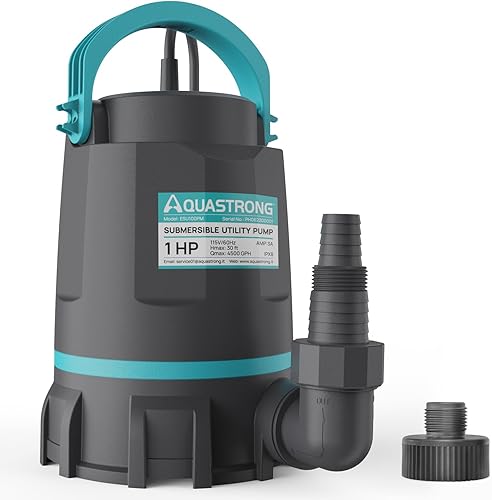 Best for light weight and portability
AQUASTRONG 1 HP Sump Pump 4500 GPH
 Best for small pits and low flow
Zoeller M98 Flow-Mate 1/2 HP Cast Iron Sump Pump
Aluminum vs cast iron sump pump: what actually differs?
The housing metal changes heat shedding, weight and corrosion resistance, not the flow rate. Flow comes from horsepower and impeller design, so don't pick a pump by casing alone.
Cast iron is dense and conducts heat away from the motor. An oil-filled cast iron motor, like the Zoeller M98's, uses that mass to hold a steady temperature during long runs.
Aluminum is lighter, which makes the pump easier to carry and set into the pit. It still corrodes in a damp sump, and the light shell holds less heat than cast iron.
Thermoplastic sits beside both as a third option. The AQUASTRONG 1 HP pump uses a reinforced engineering thermoplastic casing that resists corrosion and abrasion, at 8.5 lb.
There is a fourth detail that rarely gets mentioned: the hardware. The Zoeller M98 pairs its cast iron body with a stainless steel float guard, switch arm and hardware, so the parts that move and touch water don't rust even though the housing is iron.
The Wayne pumps take the same approach, with a cast iron volute under a stainless steel motor housing. When you compare aluminum to cast iron, ask what the fasteners and the float arm are made of too, because a good housing with cheap hardware still fails.
Cast iron vs aluminum sump pump: side by side
Cast iron wins on motor life in a wet pit, while aluminum wins on weight. The table below puts the four pumps next to each other so the trade-off is concrete.
| Pump | Motor | Housing | Flow rate | Weight |
|---|---|---|---|---|
| AQUASTRONG 4500 GPH | 1 HP | Reinforced thermoplastic | 4,500 GPH | 8.5 lb |
| Zoeller M98 | 1/2 HP | Cast iron | 4,320 GPH | 31 lb |
| Wayne CDU980E | 3/4 HP | Cast iron and stainless steel | 5,490 GPH | 12 lb |
| Wayne CDU1000 | 1 HP | Cast iron and stainless steel | 6,100 GPH | 19 lb |
The pattern is clear. The three cast iron pumps carry more mass per horsepower, and the thermoplastic pump is the lightest by a wide margin.
The Zoeller's weight is listed in kilograms in its specs, which works out to roughly 31 lb. That's the heaviest pump here and a real factor when you lift it out of the pit.
What the weight figures mean in your hands
The gap between 8.5 lb and 19 lb sounds small on paper. In the pit it is the difference between lifting a pump out with one hand and needing to kneel down and haul with both.
The AQUASTRONG unit is light enough that you can drain a hot tub or a window well without planning the job. The Wayne CDU1000 at 19 lb is a two-hand lift, and the Zoeller at roughly 31 lb is the one you leave in place unless you have a reason to pull it.
Weight also shapes where a pump can go. A heavy cast iron pump sits steady on the bottom of a pit and resists being knocked over by a rising float or a fast inflow.
A light pump can shift if the pit floor is uneven, so set it on a flat brick or paver if you use it as a permanent install.
Why cast iron holds up better in a wet pit
Cast iron sheds motor heat better than aluminum, and that heat is what shortens pump life. A pump that runs hot during a storm loses bearing life faster than one that stays cool.
The Zoeller M98 makes the case directly: an oil-filled motor with a cast iron housing offers superior heat dissipation, which the brand says prevents overheating and increases pump longevity.
The Wayne CDU980E and CDU1000 pair a cast iron volute with a stainless steel motor housing. The cast iron base adds mass and the stainless steel resists corrosion on the shell.
That combination is why cast iron stays the default for a primary pump. It handles the heat of a long storm run and the constant damp of a pit at the same time.
Corrosion and the epoxy finish
A cast iron pump still needs protection from the water it sits in. Zoeller coats the M98 with an epoxy finish that resists wear in harsh environments, which keeps the iron from rusting through.
Corrosion is the slow failure mode in a sump pit. It doesn't stop a pump on day one.
It eats at the housing and the hardware over seasons until a seam leaks or a bolt gives way.
Aluminum resists rust better than plain steel, but it still corrodes in a pit that never dries out. That is why the long-life housings in this class are cast iron with a coating or thermoplastic, not bare aluminum.
When aluminum or thermoplastic makes more sense
Pick a lighter housing when you move the pump often or use it as a backup. Weight matters most on installation day and on the twice-yearly clean-out.
The AQUASTRONG 1 HP pump weighs 8.5 lb and has a bottom suction design that drains water down to 1/5 inch from the surface. Its thermoplastic casing resists corrosion and abrasion.
That makes it a good fit for a window well, a hot tub drain or a portable backup you carry to the pit when a storm is coming. It also handles solids up to 1/5 inch.
The trade-off is heat. A thermoplastic shell doesn't pull heat from the motor the way cast iron does, so a light pump is a weaker choice for a primary pump that runs for hours.
If you want the full breakdown of housing materials beyond metal, our cast iron vs plastic sump pump comparison covers where each one belongs.
Which pump fits a narrow sump pit?
A vertical float switch is the feature that decides whether a pump fits a narrow pit. Cast iron and aluminum bodies are both available with floats that suit tight spaces.
The Wayne CDU980E and CDU1000 both use an integrated vertical float switch. The float rises straight up inside the pit instead of swinging out to the side.
The Zoeller M98 uses a built-in snap action float switch with a float guard. It's a cast iron pump that still fits a standard pit, and the guard keeps debris from jamming the switch.
The AQUASTRONG unit is a utility pump without an automatic float. It's best used as a drop-in backup rather than a permanent narrow-pit install.
Check your pit's inside diameter before you buy. An 11-inch pit is the common size the Wayne pumps are built for, and a narrower pit may rule out a pump with a wide float arm.
The discharge size matters too. The Wayne CDU1000 uses a 1-1/2 inch NPT discharge that meets standard building codes, so it drops into most existing setups.
The AQUASTRONG pump comes with a 1-1/4 inch NPT discharge plus a 1-1/2 inch elbow adapter and snap couplings for 3/4 inch, 1 inch or 1-1/4 inch hose, which is handy if you plan to move it around. The Zoeller M98 ships as the pump only, so check that your existing pipe and check valve match before you swap it in.
How much water does each pump move?
Flow rate follows horsepower, so match the pump to your water inflow rather than the housing metal. A 1/2 HP pump can be the right call in a slow-filling pit.
The Wayne CDU1000 moves 6,100 GPH with a 1 HP motor. The Wayne CDU980E moves 5,490 GPH at 3/4 HP.
The AQUASTRONG pump moves 4,500 GPH at 1 HP.
The Zoeller M98 moves 4,320 GPH at 1/2 HP. That's the lowest figure here, but it's plenty for a pit that fills slowly.
A pump that's too small for your inflow runs longer and cycles more often. A pump that's oversized short-cycles and wears its switch faster.
Size the motor to the water, then choose the housing.
Vertical lift and where each pump gives out
Flow rate is measured near the surface, so look at the lift height too. The AQUASTRONG pump lifts water up to 30 ft of vertical height, the highest figure in this group, which suits a deep basement or a long run to a drain.
The Zoeller M98 lifts up to 23 ft, and the Wayne CDU1000 has a maximum lifting height of 10 ft.
That's the number to plan around if your discharge pipe climbs more than a storey before it exits.
Match the lift rating to your actual pipe run. A pump that moves 6,100 GPH at the outlet still needs to get the water up and out before the flow counts for anything.
Our sump pump vs utility pump guide helps if you're not sure whether you need a permanent pit pump or a portable unit.
Which pump should you buy for a primary pit?
The Wayne CDU980E is the best overall cast iron pick for most basements. Its 3/4 HP motor, 5,490 GPH flow rate and vertical float cover the common case.
The cast iron and stainless steel body handles the damp, and the top suction design helps prevent air lock and clogging without a weep hole. The vertical float fits narrow pits.
It's our top pick among the cast iron sump pumps for a reason. The 3/4 HP motor gives you headroom for storms without the extra weight of a 1 HP unit.
Pick the Wayne CDU1000 if your pit fills fast or your water table runs high. The 1 HP motor and 6,100 GPH flow rate move more water per hour.
Which pump suits a light backup or a small pit?
The AQUASTRONG 1 HP pump is the lightest option at 8.5 lb, so it's the easy one to carry and drop in. Its bottom suction drains water down to 1/5 inch.
It suits a window well, a portable backup or a pit where you want to lift the pump out without strain. The thermoplastic casing resists corrosion and abrasion.
The Zoeller M98 is the better cast iron choice for a small pit with modest inflow. Its 1/2 HP motor moves 4,320 GPH, and the vortex impeller passes solids.
The Zoeller also has a 9 ft cord with an LED plug so you can check for power at a glance. The stainless steel hardware, float guard and switch arm resist rust.
Who should buy which?
Buy cast iron for a permanent primary pump and a light pump for backup duty. The housing metal should match the job, not the other way around.
Go cast iron if the pump sits in the pit year round and runs during storms. The Wayne CDU980E fits most basements, and the CDU1000 covers a high water table.
Go lighter if you move the pump between spots or use it as a backup. The AQUASTRONG unit weighs 8.5 lb and drains to 1/5 inch.
The Zoeller M98 suits a small pit and a slow inflow where you still want a cast iron housing. Its 1/2 HP motor and vortex impeller keep maintenance low.
If you're weighing a different metal against cast iron, our cast iron vs stainless steel sump pump comparison shows where each one lasts longest.
Verdict: cast iron wins for most basements
For most readers the cast iron Wayne CDU980E is the pump to buy, and the aluminum or thermoplastic pump is the backup. The aluminum vs cast iron sump pump question comes down to how long the pump sits in water and how often you lift it out.
Cast iron sheds heat, resists corrosion in a wet pit and holds up through long storm runs. That makes it the right housing for the pump that protects your basement every season.
Pick lighter only when weight is the real problem. The AQUASTRONG unit is the pump you carry to the pit, not the one you leave there for years.
If you're still deciding between a pit pump and a portable unit, the sump pump vs utility pump guide settles that before you pick a housing.
Frequently asked questions
Is a cast iron sump pump worth the extra weight?
Yes for a primary pump that sits in water year round. Cast iron housings shed motor heat better, and the extra weight is only a problem on the day you lift the pump out to clean the pit.
Will an aluminum pump rust in a sump pit?
Aluminum resists rust better than plain steel but still corrodes in a constantly wet pit. Thermoplastic and cast iron housings are the more common long-life choices for a pump that stays submerged.
How heavy is a cast iron sump pump compared with an aluminum one?
The cast iron pumps here weigh about 12 to 31 lb, while the thermoplastic AQUASTRONG unit weighs 8.5 lb. That gap matters when you pull the pump out twice a year to check the float and clean the intake.
Can I use an aluminum or thermoplastic pump as a backup?
A light pump works well as a portable backup you drop into the pit during a storm. For a permanent second pump in the same pit, a cast iron unit with a float switch is the sturdier choice.
Does the housing material change how much water a pump moves?
No. Flow comes from horsepower and impeller design.
The 3/4 HP Wayne CDU980E moves 5,490 GPH and the 1 HP AQUASTRONG moves 4,500 GPH, so the smaller-horsepower cast iron pump actually moves more water here.


