Zoeller M98 vs M95: What Is the Difference? (November 2026)
The Zoeller M98 is the better pump for most basements. It has a sealed oil-filled motor and adds a float guard and LED power plug; the M95 is the leaner backup choice when a second pump needs to share the pit.
On this page (8 sections)
The Zoeller M98 is the better pump for most basements. It has a sealed oil-filled motor and adds a float guard and LED power plug; the M95 is the leaner backup choice when a second pump needs to share the pit.
That is the short version of the zoeller m98 vs m95 question. Both are 1/2 HP submersible sump pumps from the same maker, so the real differences are in the motor, the hardware and the features you get for the money.
 Best for most basements
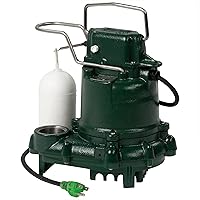
Zoeller M98 Flow-Mate 1/2 HP Cast Iron Sump Pump

Zoeller M98 vs M95 at a glance
The M98 wins on features and build; the M95 wins on simplicity and a lower price tier. The table below puts the facts side by side so you can see where the two pumps really differ.
| Feature | Zoeller M98 | Zoeller M95 |
|---|---|---|
| Horsepower | 1/2 HP | 1/2 HP |
| Flow rate | 72 gpm | 80 gpm |
| Maximum lifting height | 23 feet | |
| Motor and housing | Oil-filled motor, cast iron housing | 1/2 HP motor, cast iron and stainless steel |
| Impeller | Vortex, corrosion-resistant plastic | |
| Switch | Built-in snap action float | |
| Power check | LED plug, 9 foot cord | |
| Hardware | Stainless steel float guard and switch arm | Cast iron and stainless steel build |
| Weight | About 31 lb | 38 lb |
| Dimensions (L x W x H) | 11 x 7.75 x 12.5 in | 12.25 x 7.75 x 11 in |
| Warranty | 12 months from install or 18 months from manufacture |
The horsepower figure is the same, so neither pump has a strength advantage in a normal basement pit. The gaps sit in the motor design, the water-moving numbers and the extras.
The M98's 23-foot maximum lifting height matters if your discharge pipe runs up a long wall or out to a high point. Plan your vertical run first, because the M95's lift figure isn't part of its published specs.
Both pumps use 1/2 HP motors with cast iron in the housing. The difference is how much extra detail Zoeller publishes about each one.
The M98 gives flow, lift, switch type, impeller material and cord length; the M95 gives flow, voltage and materials. That gap in detail is a big part of why the M98 reads as the more finished product.
Which pump moves more water?
The M95 edges ahead on rated flow at 80 gpm against 72 gpm for the M98. That is a small gap, and it rarely decides the choice on its own.
Both figures are gallons per minute under test conditions. An 8 gpm difference matters less than whether your pit fills faster than either pump can clear it.
The M98's own description says it removes up to 4320 gallons per hour. That is the same 72 gpm figure restated, so the two numbers agree.
The bigger point is the pattern of water in your pit. A pump that runs for long stretches during storms needs to shed heat well; one that only kicks in now and then has an easier life.
If your basement takes on water during every heavy rain, go with the M98. If your pump sits idle most of the year and only fires after a big storm, the M95's simpler flow advantage is enough.
Flow also falls as the discharge head rises. The M98's 72 gpm pairs with a published 23-foot maximum height; the M95's 80 gpm doesn't come with a lifting figure.
For a short, flat discharge the gap is close to what the numbers say. For a tall vertical run, the M98 gives you more to work with.
Which motor handles heat and long runs better?
The M98's oil-filled motor and cast iron housing are built to shed heat during long runs. The M95 has a 1/2 HP motor in a cast iron and stainless steel body.
Heat is the quiet killer of sump pumps. A motor that runs for hours during a storm builds temperature, and an oil-filled design pulls that heat away from the windings more effectively than a dry motor.
The M98's cast iron housing adds to that, since metal spreads heat across a wider surface than plastic would. Zoeller says this combination prevents overheating and lengthens pump life.
That matters most when your pump cycles often. A pump that runs for 10 minutes per storm stays cool easily; one that runs for an hour straight needs the better cooling design.
The M95 still has a cast iron and stainless steel build, so it isn't a flimsy pump. It's simply the less elaborate motor, which is why it suits backup duty where it rarely runs.
The materials tell the same story in a wet pit. The M98 uses stainless steel hardware, a stainless float guard and a stainless switch arm, and its description notes an epoxy-coated finish over the cast iron.
Those are the parts that sit in water and take the splashing. The M95 lists cast iron and stainless steel in its build but doesn't break out which parts are which.
Both makers factory test their pumps in water before shipping, so the build quality starts from the same place. The M98 just tells you more about how it holds up over years.
How do the float switches compare?
The M98 has a built-in snap action float switch that runs the pump automatically. The M95's switching setup is different, so check what your specific model includes before you install it.
A snap action float flips decisively at a set water level. That means the pump starts and stops cleanly instead of hovering on and off at the trigger point, which wears out motors and switches.
The M98's float also comes with a guard. The guard keeps debris from wedging under the float and jamming it in one position, which is a common reason pumps fail to start.
If your pit collects grit, leaves or bits of gravel, that guard is worth having. A float that jams down leaves you with a pump that never runs; a float that jams up runs the motor dry until it overheats.
The M95 doesn't come with a float guard as part of its kit. If you buy one, plan to keep the pit clean and test the switch now and then.
Read the instructions that come with the unit and confirm how the float is set before the first storm.
What do the LED plug and cord add?
The M98 includes a 9-foot cord and an LED plug that lights up when the pump has power. That is a convenience feature the M95 doesn't offer.
Power outages are one of the main reasons a sump pump fails during a storm. The LED plug lets you glance at the outlet and see whether the circuit is live, so you know right away whether the pump has a chance to run.
It doesn't tell you the pump itself is working. A pump can have power and still fail on a jammed float or a broken impeller, so pair the plug with an occasional manual test.
The 9-foot cord gives you some reach from the outlet to the pit. Measure that distance in your own basement, since a short cord means adding an extension or moving the outlet.
For a backup pump in a second pit, the LED plug is less important. For your main pump, it's a small feature that saves you a trip to the basement with a flashlight.
Which pump suits your basement?
Buy the M98 for the main pump in a pit that sees regular water; buy the M95 for a spare or a budget build. Your water volume and how often the pump runs decide the call.
Who should buy the Zoeller M98?
The M98 is the right pump for most homes with a finished basement or a pit that fills during storms. Its oil-filled motor handles long runs, the snap action float runs on its own and the float guard protects against debris jams.
Pick it if your current pump has failed before or if your discharge line runs high, since Zoeller publishes a 23-foot maximum lifting height.
Who should buy the Zoeller M95?
The M95 suits a backup slot. If you already have a main pump and want a second 1/2 HP unit in the pit for storm backup, the M95 does the job without paying for features it won't use often.
It also works for a tight budget build or a secondary pit that only collects seepage. The cast iron and stainless steel body is solid, and Zoeller factory tests each pump before shipping.
Can the two pumps share one pit?
Yes, if the pit is wide enough. Pairing the M98 as the main pump with the M95 as the backup puts two 1/2 HP units in the same hole, and either one can cover a failure in the other.
The footprint is the limit. The M98 is about 11 x 7.75 x 12.5 inches and the M95 is about 12.25 x 7.75 x 11 inches.
Two pumps at roughly a foot long each, plus their floats and discharge pipes, want a pit around 18 inches across or larger. Measure the opening and the depth before you commit, and check that the floats have room to swing without hitting each other.
Build, weight and fit in the pit
Both pumps fit a standard 18-inch sump pit; the M95 is heavier and a touch wider and shorter, the M98 is lighter and taller. Measure your pit before you buy either one.
The M98 measures about 11 x 7.75 x 12.5 inches and weighs roughly 31 pounds. The M95 measures about 12.25 x 7.75 x 11 inches and weighs 38 pounds.
The extra weight is materials, not power, since both are 1/2 HP units.
The M98's extra height needs a little more clearance in a shallow pit. The M95's extra width needs a little more room side to side.
If you plan to run two pumps in one pit, check the combined footprint as above.
Weight matters when you install or pull the pump. The M98 is easier to lower into a deep pit on a rope, and the lighter unit puts less strain on the discharge pipe that holds it.
The warranty is the last fit detail to note. The M98's coverage runs 12 months from installation or 18 months from manufacture, whichever comes first, and abuse or misapplication can void it.
The M95's coverage isn't part of its published specs. If coverage matters to you, ask the seller about the M95's terms before you buy.
Which pump should you buy?
Buy the Zoeller M98 for your main sump pump; choose the M95 only as a backup or on a tight budget. That is the answer to zoeller m98 vs m95 for most readers.
The M98 has the better motor for long runs, a snap action float that runs itself, a float guard against debris and an LED plug that shows power at a glance. Those features are why it scores higher here.
The M95 is a solid 1/2 HP pump with a cast iron and stainless steel body. It just doesn't offer the same cooling, float or power-check features, which makes it the spare rather than the star.
If you want the full breakdown of the winner, read our Zoeller M98 Flow-Mate sump pump review. For a smaller Zoeller pair, see Zoeller M53 vs M63 or Zoeller M53 vs M57.
And if you're weighing housing materials more broadly, our cast iron vs plastic sump pump guide helps you decide.
Pick the M98 if your pit sees steady water and you want one pump that handles long storms. Pick the M95 if you need a second pump in the pit or your budget is set, and plan to keep the pit clean since the float guard isn't part of its kit.
Frequently asked questions
Is the Zoeller M98 the same as the M95?
No. Both are 1/2 HP Zoeller sump pumps, but the M98 is the Flow-Mate model with an oil-filled motor, cast iron housing, a snap action float switch, an LED power plug and a float guard.
The M95 is the plainer model with cast iron and stainless steel parts.
Which Zoeller pump moves more water, the M98 or the M95?
The M95 lists a slightly higher flow rate of 80 gpm against 72 gpm for the M98. In practice the difference is small next to the M98's extra features and sealed motor, so don't choose between them on flow alone.
Can I put the M98 and M95 in the same sump pit?
Only if the pit is wide enough. The M98 measures about 11 x 7.75 x 12.5 inches and the M95 about 12.25 x 7.75 x 11 inches, so two pumps plus their floats need a pit around 18 inches across or more.
Measure before you buy.
What does the LED plug on the M98 do?
It lights up when the pump has power, so you can see at a glance that the circuit is live. That is a quick visual check, not a guarantee the pump is running, so you still want to test the pump now and then.
Which pump suits a basement that floods often?
The M98 is the better fit for frequent water because its oil-filled motor and cast iron housing shed heat and its snap action float runs automatically. The M95 is the cheaper choice for a spare or a backup pump that only kicks in when the main one fails.