Zoeller M53 vs M57: What Is the Difference? (November 2026)
The Zoeller M53 wins for most basements; the M57 is the better choice for dirty sump pits with stringy debris. The M53 has the higher score here, and its plastic vortex impeller handles solids easily while keeping the pump lighter to install.
On this page (9 sections)
- What is the quick verdict in the Zoeller M53 vs M57 comparison?
- How do the two pumps compare side by side?
- Which impeller material should you choose?
- Which float design holds up better?
- How much does weight and install effort matter?
- Who should buy the Zoeller M53?
- Who should buy the Zoeller M57?
- How do these two compare with other Zoeller pumps?
- What is the final verdict in the Zoeller M53 vs M57 matchup?
The Zoeller M53 wins for most basements; the M57 is the better choice for dirty sump pits with stringy debris. The M53 has the higher score here, and its plastic vortex impeller handles solids easily while keeping the pump lighter to install.
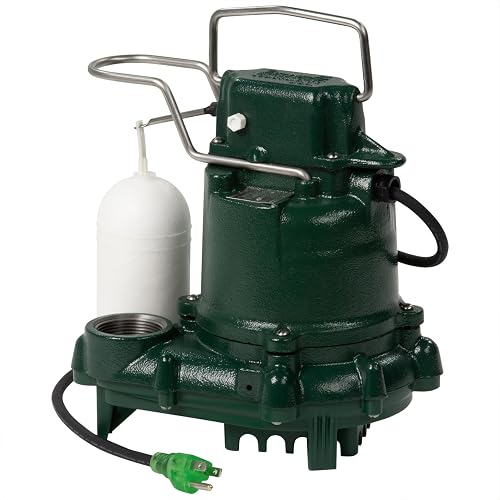
Both are Mighty-Mate pumps with 3/10 HP oil-filled motors, cast iron housings and the same 43 gpm flow rate. The zoeller m53 vs m57 decision really comes down to what sits in your pit and how much weight you want to handle.

What is the quick verdict in the Zoeller M53 vs M57 comparison?
Choose the M53 for a clean, typical basement pit, and choose the M57 only when your pit is gritty or full of debris. The M53 is the easier pump to live with for most households.
The M53 carries a 9.5 score against 8.4 for the M57, and the gap reflects fit for the average buyer rather than a huge performance difference. Both pumps move water at the same rate and lift it to the same height.
What separates them is the impeller. The M53 uses a plastic vortex impeller, and the M57 uses a cast iron one.
That single part changes how each pump handles abrasion and weight.
The two motors are not quite twins on paper. The M53 is listed at 0.3 hp and the M57 at 0.33 hp, even though Zoeller sells both as 3/10 HP Mighty-Mate units.
Neither rating changes the flow you get at the discharge, so the label should not drive your pick.
For a standard basement pit that sees groundwater and the odd bit of debris, the M53 does the job with less weight and the LED power plug. The M57 earns its place in pits that collect sand, grit or stringy material.
How do the two pumps compare side by side?
The two Mighty-Mate pumps share a motor design and flow rating, but differ in impeller material, float type and weight. The table below lines up the facts that actually change the buying decision.
| Product | Best for | Horsepower | Flow rate | Maximum lifting height | Our score |
|---|---|---|---|---|---|
| Zoeller Mighty Mate M53 Sump Pump | most basements | 0.3 hp | 43 gpm | 19.25 ft | 9.5 |
| Zoeller M57 Mighty-Mate Sump Pump | dirty sump pits | 0.33 hp | 43 gpm | 19.25 ft | 8.4 |
The horsepower labels are close but not identical. The M53 is listed at 0.3 hp and the M57 at 0.33 hp, yet both are sold as 3/10 HP pumps.
Flow rate and maximum lifting height match at 43 gpm and 19.25 ft.
The bigger split is the impeller. A plastic vortex impeller resists corrosion and passes solids easily.
A cast iron vortex impeller handles abrasive grit better but can rust if it sits in standing water.
Float design also differs. The M53 uses a built-in snap action float switch with a stainless steel guard.
The M57 uses a solid polypropylene float that will not become waterlogged.
The bodies look alike at first glance but each model has its own details. The M53 has a cast iron motor housing with an epoxy-coated finish and stainless steel hardware.
The M57 has the same oil-filled motor and cast iron housing, and its material is cast iron. The M53's material is cast iron too.
Which impeller material should you choose?
Choose the plastic impeller for clean water and the cast iron impeller for gritty water. The impeller is the part that takes the wear, so match it to what your pit collects.
How the plastic vortex impeller behaves
The M53's plastic vortex impeller is made from a corrosion-resistant material. It passes solids without clogging, which keeps maintenance low in a pit that sees leaves, gravel and normal basement debris.
Because the impeller is plastic, it does not rust when the pit sits wet between storms. That is a real advantage in a pit that holds water for days after a rain.
How the cast iron vortex impeller behaves
The M57's cast iron vortex impeller is the tougher option for abrasive solids. Sand and grit grind at a plastic impeller over time, while cast iron shrugs off that wear.
The M57 removes up to 2,580 gallons per hour. Our guide on cast iron vs plastic sump pump breaks down where each material wins.
There is a trade-off. Cast iron can rust when it sits in standing water, so a cast iron impeller is not automatically better.
It suits a pit that drains and refills rather than one that stays wet for long stretches. A cast iron part also adds weight, which is part of why the M57 tips the scale higher.
If your pit is clean and the pump runs only when it rains, the plastic impeller on the M53 is the simpler, lighter choice. Reach for the M57 when grit is a recurring problem.
Which float design holds up better?
The M53's snap action float switch is easy to set up, and the M57's solid polypropylene float resists waterlogging. Both are automatic, so neither needs manual control.
The M53 uses a built-in snap action float switch with a stainless steel float guard and switch arm. It switches on and off consistently and installs without extra setup.
The guard keeps debris from jamming the float. Zoeller describes the switch action as snap action, which means the contacts move cleanly from off to on rather than hovering in between.
That helps the pump cycle decisively and reduces chatter at the switch.
The M57's polypropylene float is solid, so it will not become waterlogged and sink. That matters in a pit where a hollow float could fill with water and stop triggering the pump.
Its float is vertical, and the pump is factory-tested in water before it ships.
Both floats are protected by stainless steel hardware that resists rust and corrosion. In a damp pit, that hardware is what keeps the switch working season after season.
The M53's float guard and switch arm are both stainless, and the M57 has stainless steel hardware and a float guard as well.
A hollow float that waterlogs is a common reason a sump pump stops cycling. The M57's solid float removes that failure point.
The M53's guarded snap action switch handles the same job in a lighter package. Neither float needs you to set a trip point by hand, so the install is plug-and-play either way.
How much does weight and install effort matter?
The M53 is the lighter pump to lower into a pit and pull out for cleaning. The M57's cast iron impeller and heavier body add weight you'll feel during install and service.
The M53 weighs about 23 pounds. The M57 weighs about 27 pounds.
That four pound gap matters when you are leaning over a deep pit. Part of the M57's extra weight is the cast iron impeller itself, which is denser than the plastic part on the M53.
Both pumps use a 9 ft cord, which gives you reach from the pit to an outlet. The M53 adds Zoeller's LED power plug so you can verify power at a glance without a meter.
Zoeller calls the LED plug an industry first for basement sump applications and has offered it since 2016. A lit plug tells you the pump has power, which is the first thing to rule out when a pump seems dead during a storm.
If you handle your own install and service, the lighter M53 is easier on your back. If a plumber does the work, the weight gap matters less and the impeller material becomes the deciding factor.
Check the discharge size and pit depth before you buy either pump. The M57 has a 1.5 in discharge, so matching your existing plumbing keeps the swap simple.
Our Zoeller M53 review covers the install details in full.
Who should buy the Zoeller M53?
Buy the M53 if your pit is clean and you want a lighter, proven pump with a visible power check. It is the best overall pick for a standard basement.
The M53 suits a homeowner with a typical sump pit that fills with groundwater during heavy rain. Its plastic vortex impeller passes the leaves and grit that find their way into most pits without clogging.
The pump's spec sheet lists basement, emergency and home improvement project as its intended uses, which matches a routine sump setup.
The LED power plug is a practical extra. You can glance at the plug to confirm the pump has power, which removes guesswork when a storm knocks out the circuit.
A pump that has lost power looks exactly like a pump that has failed until you check.
Its oil-filled motor and cast iron housing help shed heat and extend pump life. Stainless steel hardware and the float guard resist rust in a damp pit.
Skip the M53 if your pit regularly collects sand or heavy grit. The plastic impeller will wear faster under abrasive solids, and the M57 is the better long-term buy in that case.
Who should buy the Zoeller M57?
Buy the M57 if your pit collects grit, sand or stringy debris that chews through plastic impellers. It is the tougher pump for a dirty pit.
The M57's cast iron vortex impeller is built for abrasive solids. A pit near a gravel driveway or one that takes runoff from a dirt yard will wear a plastic impeller faster than a cast iron one.
The M57 also has a 1.5 in discharge and a 9 ft cord, so it drops into a typical pit setup without new plumbing.
The solid polypropylene float is another point in its favor. A float that cannot waterlog keeps the pump cycling reliably in a wet pit.
A pump that stops cycling during a storm is the failure that floods a basement, and the solid float closes off that path.
The M57 weighs more than the M53. That extra weight buys you abrasion resistance and a float that won't sink.
Skip the M57 if your pit stays wet and clean. The cast iron impeller can rust in standing water, and you would pay more for toughness you don't need.
For a routine clean pit, the M53 is the lighter, simpler buy.
How do these two compare with other Zoeller pumps?
The M53 sits at the practical middle of the Mighty-Mate range, with the M63 and M98 stepping up in power. If neither the M53 nor M57 fits your pit, the next size up may.
The Zoeller M53 vs M63 comparison shows where the extra horsepower of the M63 helps on deeper pits or longer discharge runs. The M63 is the step up when 43 gpm is not enough.
The Zoeller M98 review covers the higher-capacity Flow-Mate. That pump suits a bigger pit or a home that needs more flow during heavy storms.
Both pumps in this matchup lift to 19.25 ft. If your discharge run climbs higher than that, neither the M53 nor the M57 will keep up, and you need a pump rated for more head.
Start with your pit's depth, discharge height and water volume. If the M53's 19.25 ft lifting height covers your setup, there is no reason to pay for more pump.
What is the final verdict in the Zoeller M53 vs M57 matchup?
The Zoeller M53 is the better pump for most readers, and the M57 is the right pick for gritty pits. Buy the M53 unless debris in your pit tells you otherwise.
The M53 wins on score, weight and the LED power plug. It handles normal basement water and solids with a plastic vortex impeller that resists corrosion.
For a clean pit, that is the pump to install. The 9.5 score reflects how well it fits the average basement, not a promise that it beats every pump on every measure.
The M57 earns its score in a narrower role. Its cast iron impeller and solid float make it the tougher choice for pits that collect sand or stringy debris.
If your pit is dirty, the extra weight is worth it. Just keep in mind that cast iron can rust in standing water.
Decide by looking in your pit. Clean water and normal debris point to the M53.
Grit and sand point to the M57. For a deeper pit or longer run, check the Zoeller M53 vs M63 comparison before you buy.
Frequently asked questions
What is the difference between the Zoeller M53 and M57?
The main difference is the impeller. The M53 uses a corrosion-resistant plastic vortex impeller, while the M57 uses a cast iron vortex impeller and a solid polypropylene float.
Both share the same 3/10 HP oil-filled motor design and cast iron housing.
Which pump is better for a dirty sump pit?
The M57 is the better fit for a pit that collects grit, sand or stringy debris. Its cast iron vortex impeller handles abrasive solids better than the plastic impeller on the M53.
For a clean pit, the M53 is the lighter, simpler choice.
Are the Zoeller M53 and M57 the same horsepower?
Both are sold as 3/10 HP pumps, though the M57 is rated at 0.33 hp in its specs. Flow rate and maximum lifting height match at 43 gpm and 19.25 ft.
The real split is impeller material and float type, not motor size.
Do both pumps come with a power-on indicator?
The M53 includes Zoeller's LED power plug and a 9 ft cord so you can see at a glance whether the pump has power. The M57 uses a 9 ft cord and a vertical float.
Check the exact model you order for the power plug style.
How much heavier is the Zoeller M57 than the M53?
The M57 weighs about 27 pounds, compared with about 23 pounds for the M53. That gap matters when you lower the pump into a deep pit or pull it out for cleaning.
Plan for the extra weight if you handle the install yourself.
Which Zoeller Mighty-Mate should I buy for a typical basement?
Pick the M53 for most basements. It handles normal groundwater and solids with a lighter body and the LED plug.
Move to the M57 only if your pit regularly collects grit or stringy debris that would wear on a plastic impeller.


