Types of Sump Pumps for Basements Explained
The main types of sump pumps for basements are submersible and pedestal primary pumps, plus battery backup pumps for outages. Pick a submersible pump for a sealed, quiet setup in a standard pit, a pedestal pump when you want the motor above the water, and add a battery backup where power cuts are a real risk.
On this page (6 sections)
- What are the main types of sump pumps for basements?
- Which type of sump pump fits your basement?
- How do submersible and pedestal pumps differ in daily use?
- Where does a sump pump fit among basement water systems?
- What should you check before buying a basement sump pump?
- Which type should you pick for your basement?
The types of sump pumps for basements fall into three groups: submersible primaries, pedestal primaries and battery backup pumps. A submersible pump sits inside the pit, a pedestal pump keeps its motor above the water, and a backup pump runs when the power goes out.
Each type solves a different problem. Your pit depth, your discharge run and how often your power fails decide which one you should buy.
This guide explains how each type works and when to pair two of them. If you already know you want a pedestal unit, our pedestal sump pump guide takes a closer look at how that style is built.
What are the main types of sump pumps for basements?
The main types are submersible pumps, pedestal pumps and battery backup pumps. Most basements use one primary pump from the first two groups and add a backup from the third.
A primary pump does the everyday work whenever water rises in the pit. A backup pump is a second line of defense that only runs when the primary loses power or fails.
The type you choose changes what sits in the pit, how loud the system runs and how much maintenance you'll do.
Submersible pumps: sealed and quiet in the pit
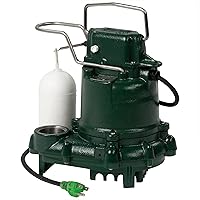
A submersible pump sits underwater inside the pit. Its motor is sealed in a cast iron or plastic housing, so the pump cools itself in the water it moves.
The Zoeller M53 shows how this type is built. It's a 1/3 HP automatic pump with a float-activated switch, a non-clogging vortex impeller and a cast iron switch case, motor and pump housing.
Zoeller says each unit is factory-tested in water before shipping.
Because the pump hides below the floor, you get a quiet system and a lid that sits flush. The trade-off is that you reach into the pit for service, so a clean, deep pit matters.
Pedestal pumps: motor above the water
A pedestal pump puts the motor on a column above the pit cover and leaves only the intake at the bottom. The motor stays clear of water, spray and high humidity.
The Zoeller Old Faithful 84 is a 1/2 HP pedestal pump with a metal-enclosed, split-phase motor that's permanently lubricated and thermal-overload protected. Its 12 in cycle is adjustable and factory set at 9 in.
The design makes the motor easy to reach and keeps it dry. The downside is noise and a visible column in the corner of the basement.
For a closer comparison of the two styles, read pedestal vs submersible sump pump.
Battery backup pumps: your second line of defense
A battery backup pump doesn't replace the primary. It runs on its own battery and takes over when the power fails or the primary quits.
The Basement Watchdog Special CONNECT includes a controller, charger, dual float switch, pump and battery box. The battery is sold separately.
It pumps 2,500 GPH at 0 ft of lift and 1,730 GPH at 10 ft, and its control panel lights up with a warning and describes what to do for maintenance.
A backup matters most in storms, when the power often goes out at the same time the water rises.
Which type of sump pump fits your basement?
The right type comes down to your pit's depth and width, your noise tolerance and how often your power fails. A submersible pump fits most standard pits, a pedestal pump covers the tight ones, and a backup covers outages.
Use these rules to decide before you shop:
- Standard pit, want quiet and a flush lid: pick a submersible pump.
- Shallow or narrow pit, motor needs to stay reachable: pick a pedestal pump.
- Frequent storms and outages: add a battery backup to either primary.
How pit depth and width change the choice
A submersible pump needs enough water around it to cool the motor and enough clearance for its float to swing. A pit that's too shallow can leave the pump cycling too often or running dry.
A pedestal pump only needs its intake at the bottom. Zoeller says the Old Faithful 84 works in containers as small as 18 x 22 in.
That makes it the practical pick when your pit is tight.
Measure your pit's inside dimensions and its depth before you buy. Then check the pump's dimensions against them.
The M53 measures 9.96 in long, 7.95 in wide and 10.16 in high.
How horsepower and head height affect the choice
Horsepower sets how much water a pump moves and how high it can lift it. A 1/3 HP pump like the M53 covers most average basements.
The Old Faithful 84 steps up to 1/2 HP.
Head height is the vertical distance the pump pushes water. The M53 has a maximum lifting height of 19.25 ft.
The Old Faithful 84's 16 in maximum lifting height suits a short discharge run.
Match the pump to your discharge pipe. A long, high run needs more lift than a short one that exits near the floor.
When a backup pump is worth the extra cost
A backup pump is worth it when your basement has flooded before during an outage or when storms regularly cut power. It's also worth it if you travel and can't watch the pit during heavy rain.
The Basement Watchdog system includes a sensor that monitors battery fluid levels, so its control panel warns you when the battery needs attention. That matters because a backup you never check can fail when you need it most.
If outages are rare and short in your area, a single reliable primary pump may be enough. In storm country, the backup is the difference between a dry floor and a flooded one.
How do submersible and pedestal pumps differ in daily use?
The daily difference is where the motor sits and how much attention it needs. A submersible pump runs quietly below the floor, while a pedestal pump runs louder but keeps its motor in plain sight.
A submersible pump's float switch triggers it automatically as water rises. The M53 uses a snap-action float switch with no complicated setup.
Its LED power plug lets you check for power at a glance.
A pedestal pump's float also runs it automatically, but the motor sits above the cover. The Old Faithful 84's chemically-resistant polyethylene float operates a positive displacement switch with its adjustable cycle.
Noise, access and service differences
A submersible pump is the quieter of the two because the water muffles the motor. You'll hear a soft hum from the pit rather than a motor running in the open.
A pedestal pump is noisier since the motor runs in the room. The upside is that you can see and reach the motor without opening the pit.
Service follows the same split. A submersible pump means lifting the unit out for checks.
A pedestal pump lets you inspect the motor in place, though the intake still sits in the water.
Clogs, solids and impeller design
A vortex impeller is the feature to look for if your pit collects debris. It spins water and solids away from the intake rather than grinding them through a tight passage.
The M53 uses a non-clogging vortex impeller. Zoeller says it easily handles solids and minimizes clogs.
That's a real advantage in a pit that catches silt, leaves or small stones.
The Old Faithful 84's pump housing top serves as a strainer that passes lint and small solids. That's a different approach: it filters before the water reaches the intake.
Power checks and everyday monitoring
Both types run automatically, but how you check on them differs. The M53's LED power plug shows power at a glance without opening anything.
The Old Faithful 84 leaves its motor and switch in view, so a quick look tells you it's running. With either type, test the float by lifting it and listen for the pump to start.
A backup adds its own monitoring. The Basement Watchdog panel lights up with a warning and describes what to do, and its sensor monitors battery fluid levels.
Where does a sump pump fit among basement water systems?
A sump pump is one part of a basement water plan, and it's not the same as every pump you might install. Knowing where it fits keeps you from buying the wrong machine.
A sump pump moves clear groundwater that collects in a pit. It handles the water table and the water that drains toward the foundation.
Other pumps do other jobs, each with its own build and its own place.
Sump pump vs sewage ejector pump
A sump pump and a sewage ejector pump look similar but handle different water. A sump pump moves clear groundwater, while a sewage ejector moves wastewater that contains solids from toilets and drains.
The two use different impellers and discharge setups. Putting toilet waste through a sump pump risks clogs and a messy failure.
Putting clear groundwater through an ejector wastes a pump built for harsher duty.
Our guide to sump pump vs sewage ejector pump breaks down the difference in build and use. Check it before you buy if your basement has a bathroom or laundry that needs to drain upward.
Sump pump vs utility pump
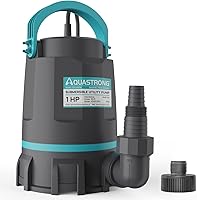
A utility pump is a portable unit you drop into standing water to drain a floor, a pool cover or a crawl space. It isn't built to sit in a pit and cycle automatically for years.
A sump pump is installed in a pit with a float switch that runs it on demand. The M53 is automatic and built for inside basement use.
A utility pump is a tool you pull out for a specific job.
Keep a utility pump on hand for emergencies, but rely on a sump pump for the everyday job of keeping the pit empty.
How a backup completes the system
A primary pump plus a backup is the full setup for most basements. The primary handles normal water, and the backup covers the outage or failure.
The Basement Watchdog backup's compact pump installs even in small or narrow pits. That means you can add it to many existing setups without rebuilding the pit.
Check that your pit has room for both and that the backup's discharge can run to the same safe outlet as the primary's.
What should you check before buying a basement sump pump?
Check four things before you buy: pit size, head height, power needs and backup plans. Getting these right means the pump fits the first time and runs reliably.
Run through this list for any pump you're considering:
- Pit dimensions: measure the inside depth, length and width. Compare them with the pump's size and its float clearance.
- Head height: measure the vertical lift from the pit to the discharge outlet. Stay under the pump's maximum lifting height.
- Discharge pipe: match the pump's discharge fitting. The Old Faithful 84 uses a 1 1/2 in FPT discharge.
- Power: confirm a grounded outlet near the pit. The M53 runs on 115 volts AC.
- Backup: decide whether you need a battery backup and leave room for it.
Matching the pump to your discharge setup
Your discharge pipe carries water away from the pit. A short, flat run is easy on the pump.
A long run or a high lift needs more power.
The M53's maximum lifting height is 19.25 ft. That covers most basement setups where the pipe exits above the foundation line.
The Old Faithful 84's 16 in maximum lifting height suits a short run.
Add a check valve so water doesn't drain back into the pit and make the pump cycle again. Keep the discharge outlet clear of the foundation and sloped away from the house.
Pit maintenance and pump upkeep
A clean pit keeps any pump running longer. Clear silt and debris that can clog the intake or jam the float.
Test the pump by lifting the float and listening for it to start, and do this before storm season.
For a submersible pump, pull it out once a year to check the intake and the float. For a pedestal pump, check the float and switch in place.
For a backup, check the battery and the panel warnings.
Choosing between horsepower ratings
A 1/3 HP pump covers average basements and normal water volume. Our roundup of the best 1/3 hp sump pumps compares models in that band.
Step up to 1/2 HP when your pit is deep, your discharge run is long or your basement fills quickly. The Old Faithful 84's 1/2 HP gives extra capacity for those cases.
More horsepower isn't automatically better. An oversized pump can short-cycle in a small pit and wear out faster.
Match the rating to your water volume and head height.
Which type should you pick for your basement?
Pick a submersible pump for a standard pit and quiet operation, and choose a pedestal pump for a shallow or narrow pit where you need the motor reachable. Add a battery backup wherever outages are a real risk.
The Zoeller M53 is the strongest all-round choice for most basements. It's a 1/3 HP submersible with a vortex impeller that handles solids, a cast iron housing and an LED power plug.
Its score of 9.2 reflects how well it fits a typical pit and everyday water volume.
The Old Faithful 84 earns its place when space is tight. Its 1/2 HP motor sits above the pit, so it fits containers as small as 18 x 22 in and stays easy to inspect.
That's the pick for a shallow pit or a basement corner with little room.
The Basement Watchdog Special CONNECT is the backup to add to either one. It runs on a battery when the power fails, includes a dual float switch and monitors its battery fluid.
Its compact pump fits small pits too.
Here's the firm rule for these types of sump pumps for basements. Pick the submersible M53 for a standard pit and the quietest everyday setup.
Pick the pedestal Old Faithful 84 when your pit is too small or shallow for a submersible. Add the Basement Watchdog backup if storms regularly cut your power.
Pair your primary with a backup and you've covered both the everyday water and the outage that would otherwise flood your basement.
Frequently asked questions
Is a submersible or pedestal sump pump better?
A submersible pump is the better fit for most standard basement pits because it sits below the floor, runs quietly and keeps water away from the motor. A pedestal pump suits a shallow or narrow pit where a submersible won't fit, or when you want the motor easy to reach for service.
Do I need a battery backup sump pump?
You need a battery backup if your area gets storms that knock out power, because a primary pump stops the moment the electricity fails. A backup runs on its own battery and keeps pumping until power returns, which matters most during the heavy rain that causes basement flooding.
Can a sump pump handle toilet waste?
No. A sump pump moves clear groundwater, and a sewage ejector pump handles wastewater from a basement toilet or shower.
The two are built for different jobs, so putting toilet waste through a sump pump risks clogs and a messy failure.
How much horsepower does a basement sump pump need?
A 1/3 HP pump covers most average basement pits and normal water volume. Step up to a 1/2 HP model when your pit is deep, your discharge run is long or your basement takes on water quickly during storms.