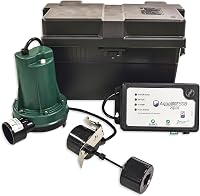
How to Set Up a Battery Backup Sump Pump
Mount the backup pump beside your primary pump, connect it to a charged 12V battery, and test it with a bucket of water before you trust it. The job takes about an hour once the pit and discharge are ready.
On this page (9 sections)
- What parts do you need before you start?
- How do you prepare the sump pit for a backup pump?
- How do you mount the pump and set the float switch?
- How do you connect the battery safely?
- How do you run the discharge line?
- How do you test the setup before a storm?
- Which battery backup sump pump should you install?
- What mistakes cause backup pumps to fail?
- How should you maintain the system after setup?
The short answer is that you set up a battery backup sump pump by mounting a second pump beside your primary pump, wiring it to a charged 12V battery, and running its own discharge line out of the house. Then test it with water and confirm the alarm works before you rely on it.
Most homeowners finish the job in about an hour.
Here is how to set up battery backup sump pump gear safely and in the right order. The steps below cover the pit, the battery, the float switch, the discharge and the test.
What parts do you need before you start?
You need a backup pump kit, a 12V deep-cycle battery, a battery box and a short length of discharge pipe. The kit should include the controller, the charger and a float switch.
Gather tools first so you don't stop mid-install. A drill, a wrench or two, a hacksaw, hose clamps and thread sealant cover most jobs.
Keep a bucket or jug nearby for testing.
Check the pump's power source and voltage before you buy anything. Every system here runs on 12V DC, and each maker recommends its own battery type.
Our guide to what size battery for sump pump backup explains the amp-hour math.
Read the install sheet that ships with your kit. It sets the pit depth, the mounting height and the check valve position for that model.
Local code may also require a check valve and a dedicated discharge.
How do you prepare the sump pit for a backup pump?
Clear the pit and set the backup pump on a solid base beside the primary pump, with its intake above the pit floor. The backup pump should sit higher so it only runs when the primary pump can't keep up or power is out.
Unplug the primary pump before you reach into the pit. Scoop out silt and debris, then rinse the pit so the new pump starts clean.
Check the pit diameter against the backup pump's footprint, since compact models fit narrow pits.
Place the backup pump so its float has room to swing or slide without hitting the primary pump or the pit wall. If the pit is shallow, a vertical float switch takes less room than a tethered one.
Keep the electrical cords and the battery box clear of the water line.
How do you mount the pump and set the float switch?
Mount the backup pump so its base rests flat and its outlet points toward the discharge. Then set the float switch so it turns the pump on above the primary pump's shutoff level.
That gap is what stops the two pumps from running together on a normal cycle.
- Bolt or set the pump on a brick or pad if the pit floor is uneven.
- Thread the discharge fitting with sealant and hand-tighten it.
- Clip the float switch so it can move freely through its full travel.
- Route the pump cord up and out of the pit, away from standing water.
Test the float by hand before you fill the pit. Lift it to the on position and listen for the pump to start.
A float that drags on the pit wall will stick and flood the basement later.
How do you connect the battery safely?
Connect the battery after the pump and float are in place, and keep the terminals dry. A 12V backup pump draws a lot of current, so a loose connection will heat up or stop the pump.
Set the battery in its box beside the pit on a dry shelf. Connect the positive lead first, then the negative, and tighten each terminal with a wrench.
Many kits include a fused lead or a ring terminal for each post.
A wet-cell battery needs distilled water topped up to the fill line. A sealed AGM battery needs no water, and the controller's charger handles it.
Wear gloves and safety glasses, and keep sparks and flames away from the battery.
How do you run the discharge line?
The backup pump needs its own discharge line or a shared line with a check valve on each pump. A shared line without separate check valves lets the primary pump push water backward through the backup pump.
Run the line up and out through the rim joist or an existing hole. Slope it downward outside so water drains away and doesn't freeze in the pipe.
Add a freeze-resistant fitting or insulation in cold climates.
Tie the backup pump's line into the primary discharge above the pit with a wye fitting and a check valve. Keep the run short and the turns gentle, since a backup pump moves less water than the primary.
Check that the outside outlet sits above grade and away from the foundation.
How do you test the setup before a storm?
Test the system by unplugging the primary pump and pouring water into the pit until the backup pump starts. Watch the water level fall, then confirm the pump shuts off when the float drops.
Repeat the test with the primary pump plugged in to make sure the backup stays off during normal cycles. Then press the controller's test button if it has one, and listen for the alarm.
Check the battery gauge and the float by hand one more time. A pump that runs but doesn't move water usually means a closed valve, a clogged intake or an air lock in the line.
Our article on how long battery backup sump pumps last covers the parts that wear out first.
Which battery backup sump pump should you install?
The best pick for most basements is the Basement Watchdog Special CONNECT, because its control panel describes each problem in plain words and its sensor watches the battery fluid for you. It's the easiest system to set up and live with.
Best for most basements: Basement Watchdog Special CONNECT
The Special CONNECT includes the controller, charger, dual float switch, pump and battery box. You supply the battery.
Its copper-wound motor and thermoplastic housing are built for sump duty.
The pump moves 2,500 GPH at 0 ft of lift and 1,730 GPH at 10 ft. That's enough for a typical basement during a storm.
The kit's compact pump fits small or narrow pits, and the control panel lights up with a warning and tells you what to do. A sensor also checks the battery fluid level.
Choose this one if you want the simplest install and the clearest maintenance prompts. The 2-year warranty is shorter than some rivals offer.
Best for long outages: Wayne ESP25n
The Wayne ESP25n is the pick when a power cut could last a day or more. Wayne says it can remove up to 10,000 gallons on a single charge with the recommended WSB1275 battery (sold separately).
Its coated steel and cast iron body suits dirty pits. The top suction design helps resist clogs and air lock, and the reed float switch turns the pump on automatically.
A battery case with an LED display and an audible alarm keeps you informed.
It pumps 2,700 GPH at 0 ft and 1,680 GPH at 10 ft. Pick it for a deep pit and long outages; the 2-year limited warranty is standard for this class.
Best for compact pits: Zoeller Aquanot 508
The Zoeller Aquanot 508 is the choice for a tight pit where fittings crowd the space. It's 10.25 in long, 7.75 in wide and 10.25 in tall, and it has an integrated check valve plus a quick-disconnect discharge.
The pump moves about 40 GPM and runs on 12V DC. Zoeller says each unit is hand built and 100% tested in the USA.
Its plastic body and aluminum seal pocket keep it light at 10.5 lb.
Pick it if the discharge plumbing in your pit is already tight. Zoeller's 12-month warranty extends to 36 months when you buy an Aquanot battery with the pump.
What mistakes cause backup pumps to fail?
The most common setup mistakes are a dead battery, a stuck float and a missing check valve. Each one leaves the backup pump unable to start when you need it.
A wet-cell battery left dry loses capacity and won't charge. Check the fluid monthly and keep distilled water on hand.
A float that rubs the pit wall jams in one position; test it by hand each month.
A shared discharge line without a check valve lets water run backward and can make the backup pump cycle endlessly. Fit a check valve on each pump.
Also keep the intake clear of silt so the pump doesn't clog.
Finally, run the test after every heavy storm. A pump that sat idle for months can fail on its first real start.
Monthly checks are the cheapest insurance you can buy.
How should you maintain the system after setup?
Check the system once a month and after any outage. Lift the float or pour water into the pit and confirm the pump starts and stops.
Wipe the float and intake free of debris.
Watch the controller lights for warnings. Most panels name the fault, so you don't have to guess.
Replace the battery when the charger can't bring it back to full.
Clean the intake screen and check the discharge outlet outside. Clear leaves and ice so water can leave the line.
If the backup pump runs often, the primary pump may be failing.
Review our comparison of the best battery backup sump pumps if you haven't bought one yet. And read is a battery backup sump pump worth it if you're still deciding whether to add one.
Once the pump is in and tested, keep the battery charged and the float free. That routine is how you set up a battery backup sump pump that works when the power doesn't.
Frequently asked questions
What size battery do I need for a sump pump backup?
Match the battery to the pump maker's recommendation. Backup pumps run on 12V deep-cycle batteries, and the amp-hour rating sets how long the pump can run during an outage.
A bigger battery buys more hours, not more flow.
Does the backup pump replace my main sump pump?
No. The backup pump is a second pump set slightly higher in the pit.
Your primary pump runs on household power and does the daily work.
The backup pump only runs when power fails or the primary pump stops or falls behind.
How often should I test a battery backup sump pump?
Test it once a month by lifting the float or pouring water into the pit. Check the battery fluid on wet-cell models and the indicator lights at the same time.
A quick monthly test catches a dead battery before a storm does.
Why does my backup pump keep beeping?
The alarm usually means a weak or dead battery, a float switch stuck in the on position, or a failed charging circuit. Read the control panel, since most models describe the problem in plain words.
Replace the battery if the alarm returns after a full charge.
How long do battery backup sump pumps last?
Plan on 5 to 7 years for the pump and 3 to 5 years for a wet-cell battery. Heat, frequent runs and poor charging shorten that life.
You can read more in our guide to how long battery backup sump pumps last.