How Long Do Battery Backup Sump Pumps Last?
A battery backup sump pump usually lasts 5 to 7 years, while its battery typically lasts 3 to 5 years. The pump's motor and float switch are the first parts to wear out, and the battery ages whether or not it ever runs.
On this page (9 sections)
- How long do battery backup sump pumps last overall?
- What decides how long a backup pump lasts?
- How long does the backup battery last?
- How long can a backup pump run on one charge?
- How do you test a backup pump and battery?
- Which battery backup sump pump is the best pick?
- How do you make a backup pump last longer?
- When should you replace a backup pump?
- What should you do before the next storm season?
A battery backup sump pump usually lasts 5 to 7 years, and its battery typically lasts 3 to 5 years. The pump and the battery age on separate clocks, so the number you care about depends on which part you're asking about.
Knowing how long battery backup sump pumps last helps you plan a replacement before a storm tests the unit. The rest of this guide breaks down each part, what shortens its life and how to tell when it's time to buy.
How long do battery backup sump pumps last overall?
Plan on 5 to 7 years for the pump itself, and 3 to 5 years for the battery that powers it. The pump is a small DC motor sitting in a wet pit, and the battery is a chemical store that degrades from day one.
Those two clocks run at different speeds. A pump can sit idle for months and still fail on the night you need it, while a battery loses capacity quietly in the corner of the basement.
Treat the pair as one system and replace whichever part fails first.
The 5 to 7 year figure assumes normal use: a few storm runs a year, a clean pit and a battery that gets checked. A pit that fills often, or a home that loses power regularly, pushes the pump toward the short end of that range.
For the primary pump's own timeline, see how long do sump pumps last.
What decides how long a backup pump lasts?
Run time, water quality and the float switch decide most of it. Every start puts wear on the motor, the impeller and the switch that turns the pump on.
- Run time: a pump that cycles through every storm wears faster than one that runs twice a year.
- Water quality: grit, sand and iron in the pit grind at the impeller and can jam the float.
- Float switch: the switch is the most common failure point, and a stuck float either burns out the motor or lets water rise.
- Installation: a pump set at the wrong height or with a kinked discharge hose works harder than it should.
- Storage conditions: heat, damp and freezing temperatures shorten the life of every part, including the battery.
A backup pump shares the pit with the main pump, so the same dirty water that wears the primary wears the backup. A pit cover and a clean sump basin help both last longer.
How long does the backup battery last?
A lead acid backup battery usually lasts 3 to 5 years, and it ages even if the pump never runs. The plates sulfate and the electrolyte weakens over time, so a battery that tested fine last year can fail this year.
Two things speed that up: heat and deep discharges. A battery kept in a warm basement corner or a garage that bakes in summer loses capacity faster.
So does a long outage that drains it flat.
The maintenance free AGM type needs no water checks, while a wet cell battery needs distilled water topped up a few times a year. Either way, test the battery every few months with a voltmeter or the pump's own test button.
Sizing matters too, so read what size battery for sump pump backup before you buy a replacement.
How long can a backup pump run on one charge?
Most 12V backup pumps run for hours, not days, on a single charge, and the exact time depends on the battery and how hard the pump works. A larger battery and a lower pumping load stretch the run time.
The Wayne ESP25n shows how the numbers work. Wayne says it can remove up to 10,000 gallons of water per hour on a single charge with the recommended WSB1275 battery.
That figure assumes a full battery and a light load, so a high water table or a long storm shortens it.
Treat run time as a buffer, not a plan. A backup pump buys you hours to act, whether that means a generator, a manual bail-out or a call to a plumber.
If the outage lasts longer than the battery, the pump stops.
How do you test a backup pump and battery?
Test the pump and battery together every few months, and do a full check before storm season. Most units have a test button that runs the pump on battery power for a few seconds.
- Pour water into the pit until the float lifts and the backup pump starts.
- Confirm the pump empties the pit and stops when the float drops.
- Press the test button or unplug the primary pump to confirm the backup runs on battery.
- Check the battery voltage or the status lights on the control box.
- Clear grit and debris from the pit and the float.
If the pump runs but the water level doesn't drop, check the discharge line for a kink or a frozen section. If the pump hums without moving water, the impeller or the check valve is the likely culprit.
Replace a battery that won't hold a charge rather than topping it up and hoping.
Which battery backup sump pump is the best pick?
The Wayne ESP25n is the best pick for most basements because its coated steel and cast iron build suits a wet pit and its float switch is built to cycle a lot. Zoeller is the pick when you want a pump hand built and tested in the USA, and Basement Watchdog is the battery pick for a maintenance free setup.
Our score weighs specs, features and buyer feedback against what you're shopping for. The Wayne leads on construction and flow, the Zoeller on build quality and its check valve, and the Basement Watchdog battery on sealed, no-top-up convenience.
Wayne ESP25n 12V Battery Backup Sump Pump: best for most basements
The Wayne ESP25n pairs a 12V DC motor with coated steel and cast iron construction. It pumps up to 2,700 GPH at 0 ft and 1,680 GPH at 10 ft, and Wayne rates it to remove up to 10,000 gallons per hour on one charge with the WSB1275 battery.
A reed float switch turns it on automatically, and the battery case has an LED display and an audible alarm. The top suction design helps resist clogs without a weep hole.
Zoeller Aquanot 508 Battery Backup System: best for a long service life
Zoeller builds the Aquanot 508 around a 12V DC pump made for sump duty, with an integrated check valve, a quick disconnect discharge and an aluminum seal pocket and cooling plate. It moves 40 GPM and is hand built and 100 percent tested in the USA.
Zoeller's warranty runs 12 months from installation or 18 months from manufacture, and extends to 36 months when you buy an Aquanot battery with it.
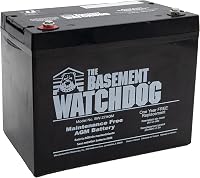
The Basement Watchdog Maintenance Free: best for low upkeep
This sealed AGM battery needs no water top-ups. Basement Watchdog rates it for up to 40 hours on the Big Dog, up to 48 hours on the Special+ and Big Combination systems, and up to 80 hours on the Emergency and Combination systems, all at a 10 percent duty cycle.
Older pre-2014 systems with the Remote Terminal are compatible; a maintenance free battery in a non-compatible older system can cause false alarms.
How do you make a backup pump last longer?
Keep the pit clean, test on a schedule and protect the battery from heat and frost. These three habits cover most of what shortens a pump's life.
- Clean the pit: scoop out grit and silt once or twice a year so the impeller and float stay free.
- Check the float: lift it by hand and let it drop to confirm it moves freely and starts the pump.
- Watch the discharge: confirm the line runs uphill and drains away from the foundation, and clear any ice in winter.
- Protect the battery: keep it off a cold concrete floor and out of direct sun, and keep the terminals clean.
- Replace on schedule: swap the battery every 3 to 5 years and the pump around 5 to 7 years, even if both still work.
A backup pump is only as good as its battery, so a fresh battery is the cheapest insurance you can buy. For the full cost-benefit picture, read is a battery backup sump pump worth it.
When should you replace a backup pump?
Replace the pump when the motor fails, the float sticks repeatedly or the housing cracks. A single failed part like a float switch or check valve can often be swapped on its own, so price that repair before buying a whole new unit.
Signs the pump is near the end include a motor that hums without pumping, repeated breaker trips and water leaking at the seal. If the pump is 5 to 7 years old and has already needed two repairs, a new unit is the simpler call.
A pump with a working motor and a clean pit can keep going past 7 years.
Replace the battery sooner than the pump. A battery that won't hold a charge after a full test is done, no matter how new it looks.
Keep a spare on hand if your area sees long outages. Our guide to the best battery backup sump pumps covers units built for longer outages and bigger pits.
What should you do before the next storm season?
Check the pump, test the battery and clear the pit before the wet season starts. That routine tells you whether how long battery backup sump pumps last still works in your favor.
Start with the battery test, then run water through the pump and watch the pit drain. Clear grit from the basin and confirm the discharge line is clear.
If either part is past its expected span, replace it now rather than waiting for the first storm to find out. A little upkeep each season keeps the backup ready when the power goes out.
Frequently asked questions
How often should I replace the backup battery?
Plan on 3 to 5 years for a lead acid battery. Test it every few months and replace it at the first sign it can't hold a charge.
A pump that has sat unused for years still needs a fresh battery before the next storm season.
Can a battery backup sump pump be repaired instead of replaced?
Sometimes. A failed float switch, check valve or discharge fitting is often replaceable on its own.
A motor that hums without pumping, trips a breaker or leaks at the seal usually means a new pump is the better buy.
Does the backup pump last as long as my main sump pump?
Usually not. A backup runs less often, but it sits in the same wet pit and its battery ages on the shelf.
A main pump often reaches 7 to 10 years, so expect to replace the backup unit or its battery sooner.
What makes a battery backup sump pump wear out faster?
Frequent starts, a pit full of grit, a float switch that sticks and a battery kept in a hot or freezing spot all shorten life. So does skipping the periodic test, because a weak battery goes unnoticed until the power fails.