Can Sump Pumps Be Submerged?
Yes, submersible sump pumps are built to sit underwater in the pit. The motor sits in a sealed oil-filled housing, so rising groundwater covers the pump without reaching the windings. Pedestal pumps are the ones you keep dry.
On this page (8 sections)
- What does "submerged" mean for a sump pump?
- How does water get into the pit in the first place?
- How high can water rise before the pump is in trouble?
- What happens if the power goes out while the pit is full?
- Can a pedestal pump be submerged?
- What should you do when a flooded pit won't drain?
- Which pump suits a pit that fills often?
- The short answer on submerged sump pumps
Yes, a sump pump can be submerged, as long as it is a submersible model. These pumps are built to sit in the pit with water over the motor, and the sealed housing keeps the electrical parts dry while the pump works.
A pedestal pump is the opposite: its motor stays above the water line on a stand. So the answer to whether sump pumps can be submerged depends on which type you own.
A sealed submersible unit handles it by design. A pedestal unit does not.
The confusion usually comes from seeing a pump buried in a flooded pit. That looks alarming, but for a submersible pump it is normal.
The real question is whether the float still turns the pump on and whether the water leaves the pit. This guide covers how submersion works, how high the water can get, and what to do when a basement takes on water.
What does "submerged" mean for a sump pump?
A submersible sump pump is meant to run with its motor underwater, so submersion is normal operation, not damage. The motor sits inside a cast iron or steel housing that seals out water.
The pump pulls water in through a bottom intake and pushes it up the discharge pipe.
That design is why the pump can sit in a pit that fills during a storm. Water surrounds the motor and helps carry heat away from it.
The sealed case and the oil-filled motor keep the electrical parts isolated from the water around them.
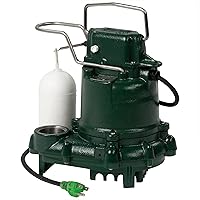
The Zoeller M53 shows how this works in practice. It's a 1/3 hp automatic pump with a cast iron motor and pump housing and a non-clogging vortex impeller.
Its snap-action float switch turns it on as the pit fills. A submersible pump like this is built for the wet spot at the bottom of a basement.
The pump has to sit on a solid base in the pit. If it tips or floats, the intake can pull air and the motor can overheat.
The float should move freely and never catch on the pit wall or the discharge pipe.
How does water get into the pit in the first place?
Groundwater and rain seep in through the footing drain and collect in the pit, which is the low point under your basement floor. The pit is a sump, a hole lined with gravel or a plastic liner, and the pump sits at its bottom.
As water rises, the float lifts and starts the pump.
The pump pushes the water out through a discharge pipe that runs up and out of the house. A check valve near the pump stops water from falling back into the pit when the pump shuts off.
A pit that fills faster than the pump can clear it will keep rising, even with the pump running.
Heavy rain and snow melt are when the pit works hardest. Water can also come from a failed footing drain, a high water table, or a crack in the foundation wall.
If the pit fills when it hasn't rained, the source may be a leaking pipe or a floor drain feeding into the sump.
How high can water rise before the pump is in trouble?
A sealed submersible pump keeps working while water covers it, but the switch has to keep turning it on. The pump's limit is not the depth of water over the motor.
The limit is whether the float can still rise and fall and whether the pump can move the water out as fast as it comes in.
Water above the float's "on" point means the pump is not keeping up. That can happen when the pump is undersized for the inflow, the discharge line is blocked, or the power is out.
A pump that is the right size for the pit and the water table will switch on and drop the level before the water reaches the basement floor.
Sizing matters more than depth. A 1/3 hp pump suits many average basements, while a 1/2 hp unit moves more water per hour.
Our guide to 1/3 hp sump pumps covers when the smaller size is enough. If your pit fills fast in storms, run the numbers in how to determine sump pump size before you buy.
What happens if the power goes out while the pit is full?
The pump stops, and the water keeps rising, so a backup system is what protects the basement. A battery backup pump runs on its own battery when the main power fails.
It sits in the same pit or beside it and takes over when the primary pump goes quiet.
The Basement Watchdog Special CONNECT is a battery backup system with a 1/4 hp pump that runs on a battery (sold separately). It pumps 2,500 GPH at 0 ft of lift and 1,730 GPH at 10 ft.
Its controller lights up with a warning and tells you what to do, and a sensor monitors the battery fluid level. The compact pump fits small or narrow pits.
A backup pump does not replace the main pump. It buys time until power returns or you can act.
Pair it with an alarm so you know the water is rising before the floor gets wet. A backup plus a correctly sized main pump is the setup that keeps a basement dry in a long outage.
Can a pedestal pump be submerged?
No, a pedestal pump's motor must stay above the water line. The motor sits on top of a stand, and only the intake and float reach into the pit.
Water that rises over the motor can damage it and create a shock risk.
If your pit floods often, a pedestal pump is the wrong tool for that spot.
A pedestal pump suits a narrow pit or a low water table where the pit rarely fills high. Its motor stays dry, and it's easier to service without pulling it out of the water.
Our guide to the best pedestal sump pumps covers the models built for tight pits. If your pit regularly fills over the stand, move to a submersible pump instead.
What should you do when a flooded pit won't drain?
Check the float, the power and the discharge line first, because one of those three is usually the reason a full pit stays full. A float stuck against the pit wall never lifts to turn the pump on.
A tripped breaker or an unplugged cord leaves the pump silent. A frozen or clogged discharge pipe stops the water from leaving even when the pump runs.
Start with the float. Lift it by hand and listen for the pump to start.
If it runs, the switch or the float's travel is the problem. If it doesn't run, check the outlet and the breaker.
Then look at the discharge line. A line that runs outside can freeze in winter or clog with debris.
A check valve that sticks shut traps water in the pipe and can stop flow. Clear the line and test the pump again.
If the pump hums but doesn't move water, the intake may be blocked with gravel or the impeller may be jammed. Unplug the pump before you reach into the pit.
A pump that runs dry or overheats can trip its own thermal protection and shut off.
Which pump suits a pit that fills often?
A sealed submersible pump is the right choice for a pit that regularly fills with water. The Wayne CDU800 is a 1/2 hp submersible pump with a cast iron and corrosion-resistant steel body.
It moves up to 5,100 gallons per hour and has a tested vertical float switch.
Its top suction design minimizes clogging and needs no weep hole. It's built for pits 11 inches or larger and carries a 3-year warranty.
The Zoeller M53 is the smaller option for average basements. Its 1/3 hp motor and vortex impeller handle solids without clogging, and the cast iron housing stands up to constant wet.
It's the pick when your pit fills at a steady rate rather than a torrent.
For a narrow pit that rarely floods, a pedestal pump keeps the motor dry. For a pit that fills over the stand, switch to submersible.
If you're outfitting a whole house, our guide to the best sump pumps for residential use compares the main options by pit size and water load.
The short answer on submerged sump pumps
Can sump pumps be submerged? Yes, submersible models are built to sit in water and pump it out.
The motor's sealed housing keeps water out, and the water around it helps cool the motor. The pump only needs enough water to cover the intake, and a correctly set float starts it before the pit gets deep.
The pump type decides the answer. A submersible pump handles a flooded pit.
A pedestal pump must stay dry. If your pit fills fast or the power fails often, add a battery backup.
Check the float and discharge line first when a full pit won't drain. Pick a 1/3 hp submersible for an average basement and a 1/2 hp unit for heavy inflow.
For a narrow pit that stays low, a pedestal pump is the better fit.
Frequently asked questions
Can a sump pump run while it is underwater?
A submersible pump is designed to pump while sitting in water, so the intake stays covered and the motor stays cool. It should not run dry for long periods.
The float should turn it on before the water rises over the housing.
How deep can water get before a sump pump stops working?
Water depth is not the limit for a sealed submersible pump. What matters is whether the switch can still turn it on and whether the discharge line can move the water out.
A float switch set correctly starts the pump well before the pit overflows.
Is it normal for water to cover my sump pump?
Yes, during heavy rain the pit fills and the pump sits fully in the water, which is how submersible units are meant to work. The pump should switch on and drop the level before the water reaches the floor.
If it stays submerged with no pumping, check the float and the power.
Can I use a regular pump in a flooded basement?
A submersible sump pump is the right tool for a basement pit. A pedestal pump keeps its motor above the water line, so it cannot sit in a flooded pit.
A battery backup pump adds a second line of defense when the power goes out.
Does a submerged sump pump need to be fully underwater?
No. The pump only needs enough water to cover its intake, and a properly set float turns it on before the housing is fully buried.
The motor stays cool through the water around it, but it does not need to be completely under to work.