Zoeller M63 Sump Pump Review: Worth It? (November 2026)
The Zoeller M63 is a solid buy for a standard basement pit where you want automatic operation from a cast iron pump with a 5-year warranty. Its snap-action float and LED power plug make weekly checks simple, but the higher-flow 1/2 HP M98 may suit a pit that fills fast better.
On this page (8 sections)
The Zoeller M63 is a solid buy for a standard basement pit where automatic operation and cast iron build matter more than raw flow. It removes up to 2,580 gallons per hour and arrives factory-tested with a 5-year limited warranty.
Pick the 1/2 HP M98 instead if your pit fills fast.
This review walks through what the M63's specs mean in daily use: the snap-action float, the LED plug, the oil-filled motor and the vortex impeller. It also covers setup, upkeep and the two other Zoeller pumps worth a look.
Our score weighs specs, features and buyer feedback against what you're shopping for.
The Zoeller M63 at a glance
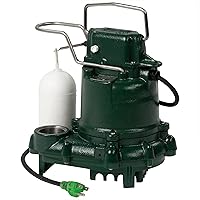
The M63 is a submersible 3/10 HP cast iron pump built for automatic basement duty. Its built-in snap-action float handles on and off without a separate switch, and the LED plug makes power checks quick.
Zoeller M63 Automatic Sump Pump: Best for standard basement pits

- 3/10 HP oil-filled cast iron motor
- Built-in snap-action float switch
- 9 ft cord with LED power plug
- Cast iron vortex impeller
- 5-year limited warranty
A cast iron automatic pump for everyday basement duty. The snap-action float, LED plug and 5-year warranty make it easy to own and easy to check.
Pros
- Oil-filled motor and cast iron housing shed heat well
- Built-in snap-action float needs no separate switch
- LED plug shows power at a glance
- Factory-tested in water before shipping
- 5-year limited warranty
Cons
- A 3/10 HP pump moves less water than the 1/2 HP M98 here
- Submersible body needs a pit deep enough for the float to swing
It's 10.25 in long, 7.75 in wide and 10.25 in tall, and weighs 10 lb. The 9 ft cord gives you reach from the pit to a nearby outlet.
Zoeller uses stainless steel for the float guard and switch arm, so the parts that sit in water resist rust.
The body is epoxy-coated, which helps it stand up to a damp pit. Zoeller says each pump is submerged and tested at the factory before it ships.
That's a useful promise for a part you install and then forget about until a storm.
The model number is 63-0001, and it runs on standard 115 volt household current. That's the same circuit most basement outlets supply, so you won't need special wiring.
The pump ships on its own, so plan for a discharge pipe, fittings and a check valve as separate parts.
The LED plug is more than a light. Zoeller introduced it in 2016 as the first LED plug in a basement sump application, and it was designed for both plumbers and homeowners.
It shows that the outlet and the cord are live, which rules out the most common reason a pump sits silent during a storm.
Who the Zoeller M63 suits
Buy the M63 if your basement takes on light to moderate seepage and your pit has room for a submersible body with a swinging float. It fits the typical rectangular or round pit in a finished or semi-finished basement.
It also suits owners who want fewer things to install. The float switch is built in, so there's no separate tethered switch to mount and adjust.
You set the pump in the pit, connect the discharge and plug it in.
The stainless steel hardware matters here too. The float guard and switch arm sit in water for years, and the non-corrodible metal keeps the float swinging freely.
That's the kind of detail that decides whether a pump starts on the first click after a long idle stretch.
Skip it if your pit is narrow or shallow. A submersible pump sits down in the water, and the float needs clearance to swing.
A pedestal sump pump stands above the pit on a column and works in tighter spaces.
Skip it, too, if your pit fills fast during storms. The M63's 3/10 HP motor is steady, but a 1/2 HP model moves more water per minute.
See our heavy duty sump pump picks for high water tables.
The specs that matter in daily use
The spec that matters most is flow rate, and the M63 is rated at 43 gpm. That's gallons per minute at its rated head.
Flow alone doesn't decide. The motor's oil filling and cast iron housing help it shed heat during long runs.
A pump that overheats during a storm cycle is the one most likely to quit when you need it.
The cast iron vortex impeller is the next key part. A vortex design spins water into a whirlpool so solids pass through instead of jamming the intake.
That reduces maintenance calls and keeps water moving when grit collects in the pit.
The snap-action float switch is the last piece that shapes daily use. It clicks on and off at set water levels rather than drifting slowly.
That gives consistent starts and stops, and it means the pump won't short-cycle on small ripples.
The LED plug is a small but useful extra. It glows when the pump has power, so you can glance at the outlet and know the circuit is live.
It doesn't tell you the motor is healthy or the water level is right, but it rules out the most common failure: no power at all.
The 10.25 in square footprint also tells you something about fit. The pump is compact enough for many pits, but the float still needs swing room beside the body.
Measure the pit's inside width, not just its depth, before you commit.
How the 43 gpm rating reads in a real pit
The 43 gpm figure is a flow rating, not a promise about your pit. It tells you the pump can move 43 gallons in a minute under its rated conditions, which is more than most basements see in light seepage.
What the number doesn't say is how much head the pump faces. Every foot the discharge pipe rises, and every bend in the run, costs some flow.
A short, straight run to a nearby wall outlet keeps the pump close to its rating. A long run with several elbows asks more of the motor.
That's where the 1/2 HP M98 pulls ahead. Its 72 gpm rating and 23 ft maximum lifting height give it more room to work against a tall or winding discharge.
For a simple pit with a short run, the M63's 43 gpm is plenty.
Setting up the M63 in your pit
Setup is straightforward: set the pump on a solid, level base, connect the discharge and plug it in. The M63's built-in float means there's no switch to wire or mount separately.
Start by clearing the pit of debris. Grit and small stones can jam the impeller, and a clean pit helps the pump last.
Set the pump on a hard surface, such as a brick or a precast pad, so it doesn't sit in loose sediment.
Fit a check valve on the discharge line. It keeps water in the pipe from draining back into the pit and making the pump cycle again.
Zoeller offers a quiet check valve for this model, and many installers fit one during the job.
Run the discharge pipe up and out of the house, sloping it away from the foundation. Follow the local rules for where the water can go.
A discharge that dumps water back against the foundation just sends it back to the pit.
Before you rely on it, test the pump by lifting the float or pouring water into the pit. Watch the water level drop and listen for a clean shutoff.
Then leave the pit cover in place and check the LED plug is lit.
If your pit is small or your setup is unusual, our guide to 1/3 hp sump pumps covers how motor size and pit size pair up.
Care and upkeep for the Zoeller M63
Keep the M63 working with a short check every month and a deeper clean once a year. Most sump pump failures come from a stuck float, a clogged intake or a dead outlet, and all three are easy to spot.
Pour a bucket of water into the pit and watch the float rise. The pump should start as the water reaches the float's on point and stop as it drops.
If the float feels stiff or the pump doesn't start, clear debris around the float guard.
Check the LED plug each time. If it's dark, test the outlet with a lamp or a voltage tester.
A tripped breaker or a GFCI that won't reset needs attention before the next storm.
Clear the intake screen and the pit floor of grit. The vortex impeller passes small solids, but a buildup of sand or gravel can still wear the pump.
A yearly pit clean keeps the water path clear.
Look at the discharge line for leaks, and make sure the pipe outlet outside is clear. A frozen or blocked discharge can make the pump run against a closed pipe and overheat.
The stainless steel float guard is worth a look during the yearly clean. Rust and grit collect there before anywhere else, and a guard packed with sediment can hold the float down.
Rinse it clear and check that the switch arm still moves freely through its full swing.
Zoeller's 5-year limited warranty covers defects, so keep the receipt and model number. The Zoeller M53 sump pump reviews cover how the cheaper sibling compares on upkeep.
Where the Zoeller M63 falls short
The M63's main trade-off is flow versus price. Its 3/10 HP motor handles steady seepage well, but it moves less water than a 1/2 HP pump.
In a storm that fills the pit faster than the pump can clear it, the M63 may fall behind.
The submersible design also needs a pit deep enough for the float to swing. A shallow pit can leave the float jammed against the wall or the cover.
Measure your pit before you buy.
The pump's 10 lb weight is light for its class, but the cast iron body still needs a solid base. Loose gravel lets it sink and tilt, which can throw off the float.
The M63's price sits above the basic M53, and you pay for the LED plug, the premium series build and the 5-year warranty. If you just need a cast iron pump for a simple pit, the M53 covers that at a lower cost.
One more point: the pump's 9 ft cord limits where the outlet can be. If your outlet is farther away, plan an extension rated for the pump's load or have an electrician move the outlet closer.
The float guard adds a bit of width to the body, so a pit that just fits the 7.75 in pump may not fit the guard and the swing. Give the float its own clearance rather than forcing the pump into a tight corner.
The alternatives here
Zoeller M53 Mighty-Mate 1/3 HP Sump Pump
The M53 is the lower-cost cast iron option from the same brand. It has a cast iron switch case, motor and housing, plus a vortex impeller that resists clogging.
The pump's base is plastic.
It's the pick for a simple basement pit where you want cast iron build without the M63's premium extras. Check the M53's flow needs against your pit before deciding.
Zoeller M98 Flow-Mate 1/2 HP Cast Iron Sump Pump
The M98 is the higher-flow choice in this group. At 1/2 HP it's rated at 72 gpm and can lift water to 23 ft.
It uses a cast iron housing and a vortex impeller, and it has the LED plug and snap-action float like the M63.
Its warranty runs 12 months from installation or 18 months from manufacture on most Zoeller pumps, which is shorter than the M63's 5-year term. That's the price of more flow.
It's also larger, so measure the pit before switching.
The M98's greater lifting height is the detail that matters in a basement with a long discharge run. Where the M63's 43 gpm may lose ground against a tall pipe, the M98's 72 gpm and 23 ft lift keep more water moving.
If your pit sits low and the pipe has to climb, that headroom is worth the shorter warranty.
Verdict: should you buy the Zoeller M63?
Buy the M63 for a standard basement pit where light to moderate seepage is the norm. It's a well-built cast iron pump with automatic operation, easy power checks and a 5-year warranty.
For most homes, that's a sensible, low-fuss choice.
Step up to the M98 if your pit fills fast or your water table runs high. Drop to the M53 if you want cast iron build at a lower cost and don't need the LED plug or the longer warranty.
Before you order, measure your pit and confirm the float has room to swing. Then check the exact dimensions and outlet needs before you install.
A few minutes of measuring now saves a return later.
Frequently asked questions
Is the Zoeller M63 strong enough for a basement that floods often?
For light to moderate seepage, yes. Its 3/10 HP motor removes up to 2,580 gallons per hour.
If your pit fills fast during storms or your water table is high, step up to the 1/2 HP M98 for more flow.
What does the LED plug on the M63 actually tell you?
It lights when the pump has power, so you can see at a glance that the outlet and cord are live. It does not report water level or motor faults.
If the light is off during a storm, check the breaker and the outlet before blaming the pump.
How long is the Zoeller M63 warranty?
Zoeller backs the M63 with a 5-year limited warranty. Keep your receipt and model number.
Read the terms before installing, since misapplication or abuse can affect coverage.
Can the M63 handle solids in the pit?
Yes. Its cast iron vortex impeller is designed to pass solids and resist clogging.
That matters in pits that collect grit and small debris.
Clear large debris before it reaches the intake to keep the pump running smoothly.
Do I need a check valve with the Zoeller M63?
A check valve is good practice on any submersible sump pump. It stops water in the discharge pipe from flowing back into the pit and cycling the pump.
Zoeller sells a quiet check valve for this pump, and many installers fit one during setup.